
Choose a San Francisco neighborhood by your two busiest days
| Decision | How to plan it |
|---|---|
| Union Square | Compare it for trips spread across the city. Plot the actual hotel entrance to the transit stops you will use. |
| Fisherman’s Wharf or North Beach | Compare the Wharf for waterfront starts and North Beach for evenings near the restaurants you want. Check grades on the walk back. |
| The Mission | Choose it when Mission outings or the relevant BART route are central. Map the final leg to your room after dinner. |
San Francisco Travel neighborhood guide
For a first San Francisco visit without a car, start by comparing hotels around Union Square with places near the waterfront. Union Square makes sense if your days point in several directions and you want a central transit base. Fisherman’s Wharf works better if the waterfront is where your group wants to spend most of its time. North Beach and the Mission suit visitors who would rather end the day near the restaurants and streets they want to explore. The best choice becomes clearer once you know where your first two mornings begin and how you want to get back after dinner.
Union Square for a first visit with plans across the city
Look here if you have a short trip that mixes downtown sights, Chinatown and an outing farther west or south. San Francisco Travel identifies Union Square as a transit-connected base with access to BART, Muni and cable cars. Check the route from the specific hotel to the stop you actually need. A property marketed as being near Union Square can have a different approach from the station than another property with the same neighborhood label. Compare the walking directions with the luggage and mobility needs of your group in mind.
A central location is especially useful if you want to return to the hotel between activities. You might spend the morning walking through Chinatown, take a break in the room and then head to a dinner reservation elsewhere. If you expect to be out continuously from breakfast until late evening, the advantage of being centrally located is smaller. In that case, think about where you want to finish your days. A hotel that is convenient at noon but awkward at the end of the night can feel less practical than a room near the neighborhood where you will actually eat.
Fisherman’s Wharf for waterfront mornings and family logistics
Choose the Wharf when your trip revolves around the northern waterfront. If your group plans to spend time around PIER 39 or take a bay outing, staying nearby makes it easier to leave a gap between activities. Check the departure pier for any timed reservation and map it from the hotel. A generic search for the waterfront is too broad if you need to be at a particular dock at a particular time. Build in time to find the entrance and follow the operator’s boarding instructions.
This base can also suit families who prefer to go back to the room for a rest rather than spend the entire day out. Compare room layouts as closely as the map. Ask whether a second bed is a permanent bed or a sofa bed, whether there is space for luggage and whether the hotel can store bags on departure day. A less scenic room that works for four people can be a better choice than a room with a view that leaves nowhere to sit once the extra bed is unfolded.
The tradeoff is that trips to attractions away from the waterfront require a separate transport decision. If you plan to spend one full day around Golden Gate Park and another evening in the Mission, check both trips before reserving. Compare the travel time and transfers with a more central property at the same total price. This is particularly useful if you are traveling with someone who would rather avoid a long return after dinner.
North Beach for Chinatown, cafés and evenings on foot
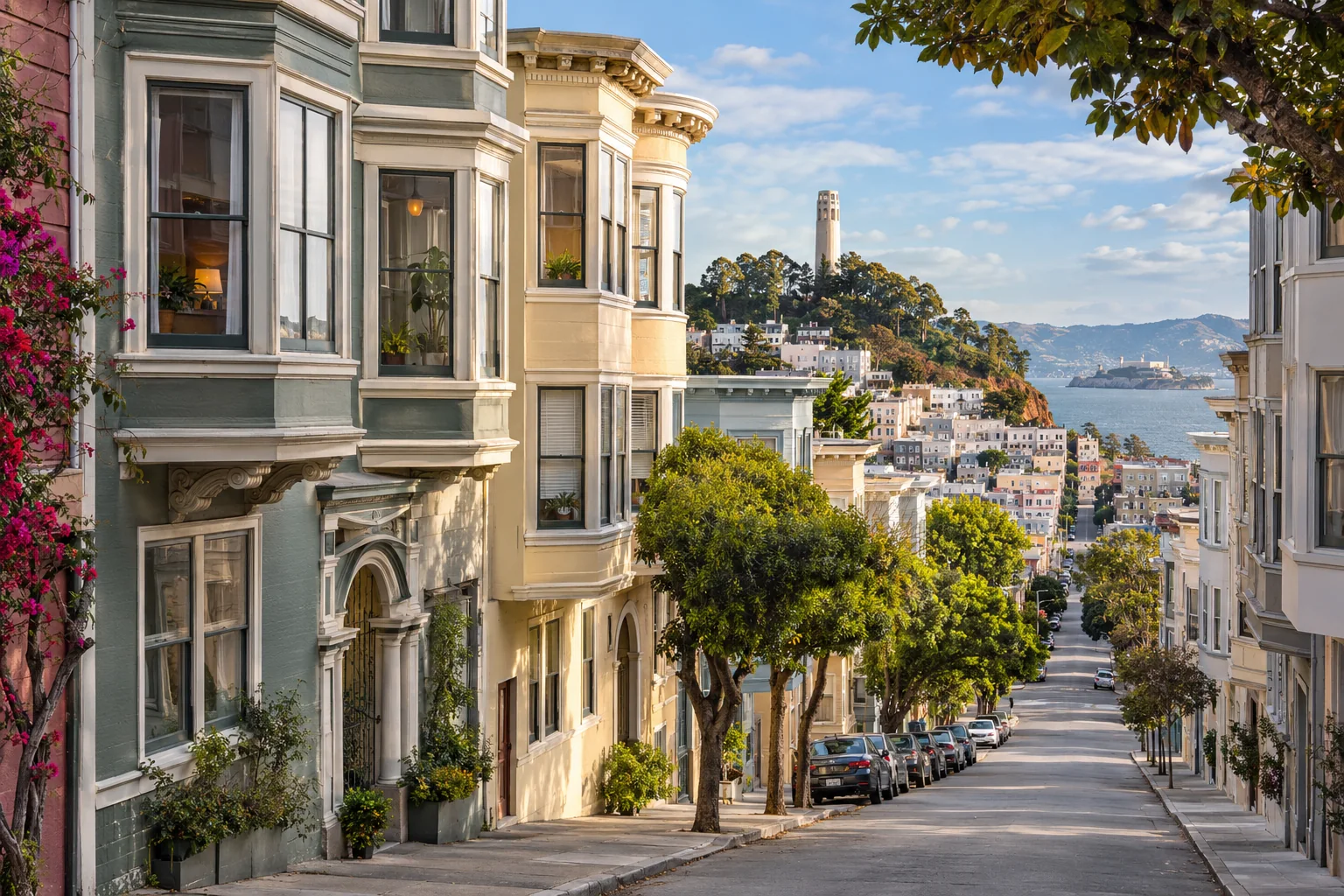
North Beach works well if the neighborhood itself is part of the trip. It is a good base for travelers who want to spend time around cafés and restaurants and then walk into Chinatown or toward the waterfront on another outing. Look at the particular streets between the hotel and your evening stops. A short distance on a flat map can feel very different on an uphill return. If the slope matters to someone in your group, check the walking route in both directions and note where you could board transit or arrange a ride.
Smaller hotels can give you a location you like and a simpler room than a larger property would offer. Check for an elevator, whether your room has a private bathroom and whether the front desk can accommodate your arrival time. If you are sensitive to noise, ask whether the available room faces the street or an interior space. Make the choice at the room level. The same hotel can offer two very different experiences depending on the floor, orientation and room type.
The Mission for food, murals and a neighborhood-based trip
Consider the Mission if you already know that you want time for food, murals and neighborhood wandering. It is especially appealing for a return visit or an itinerary with fewer downtown reservations. Check your precise location relative to the places you want to visit. A hotel listing that uses a broad neighborhood name may still leave a substantial walk to the dinner spots or transit station you have in mind. Choose a location based on the particular blocks you will use, rather than assuming every property in the neighborhood offers the same experience.
For a first visit with several major sights on the list, map a day from your Mission hotel before booking. Pick one morning destination, one afternoon destination and a return route after dinner. If the transportation fits naturally, you can get the benefits of a neighborhood stay while still seeing the rest of the city. If the route depends on several connections and an early appointment, compare Union Square again. The point is to choose where you want to spend time, and then make sure the rest of the trip can work from there.
Compare the full cost and your arrival day
Use the total for the same dates and room setup, including taxes and any mandatory charges shown during booking. If you will have a car, check parking separately and ask whether you can take it out and return without paying again. If San Francisco is one stop on a California road trip, compare keeping the car in the city with picking it up when you are ready to leave. Look at airport travel, luggage, rental pickup hours and the onward route before deciding. The cheapest room rate is only useful once you know what it costs to stay there and get around from it.
Finally, compare the first and last few hours of your stay. A late arrival makes check-in arrangements more important than a convenient route to a museum. An early departure makes it useful to know when transit operates and whether the hotel can help arrange another option. Write down the hotel address, the nearest useful stop and the place you want to go after dropping your bags. If those three fit together easily, the neighborhood is likely a good base for the trip.
Frequently asked questions
Which area should I choose for two nights?
Start with Union Square for an itinerary that covers several parts of San Francisco. Choose Fisherman’s Wharf if you mainly want a waterfront break. For a food-focused weekend, check where your reservations and daytime walks are clustered before deciding between North Beach and the Mission.
Should I change hotels halfway through a short visit?
For most short visits, keep one base and travel to the other neighborhoods during the day. Factor in packing, check-out, luggage storage and the time before your next room is available if you are considering a move. A split stay can make sense when you want two genuinely different trips or when the second hotel simplifies an early departure.
Official planning source
San Francisco Travel’s first-time visitor neighborhood guide offers a map-oriented starting point for comparing the areas.