Choose your Chicago base by the trip you will repeat
| Decision | How to plan it |
|---|---|
| The Loop | Start here for a first visit built around downtown sights. Check the walk back from your planned evening stops. |
| River North | Start here if restaurant reservations and river activities are the anchors. Compare the actual bridge crossing to daytime sights. |
| West Loop | Choose it when dinners there are central to the trip. Test the transit route to the lakefront before booking. |
Choose Chicago’s neighborhood guide
Where you stay in Chicago determines whether the river, the lakefront or your dinner reservation is the easy part of the day. The Loop makes sense for a short trip focused on museums, architecture and transit. River North works well for travelers who want to spend evenings north of the river. West Loop is appealing for a restaurant-heavy trip. Streeterville and the Magnificent Mile deserve a look when shopping, the lake or Navy Pier shapes the itinerary. Give each candidate a practical test: map the trip to the first attraction, the return from dinner and the transfer from your airport or train station.
The Loop for a sightseeing-first visit
A hotel near Millennium Park can put the Art Institute, Chicago Cultural Center and the park within walking distance. The exact street changes the experience. An address near Michigan Avenue emphasizes the park and museums. A property farther west can be handier for some rail stations or a trip that starts near the financial district. If you arrive on Amtrak, map the walk from Chicago Union Station before you choose a room. The station sits across the river from much of the Loop, and your bag route may take a different bridge from the one you would choose for sightseeing.
The Loop also has several CTA lines, but the nearest station may not serve the direction you want. Blue and Red Line trains use downtown subway stations, while several other lines run on the elevated structure. Look up the specific station and entrance, especially if you need an elevator or want to avoid carrying a suitcase up stairs. A hotel close to one station can be a longer walk from the airport line you intend to use. In the evening, some office blocks are quieter than the streets around theaters and hotels. Choose a property close to the kind of dinner you want on the night you arrive.
River North for dinners, the river and architecture
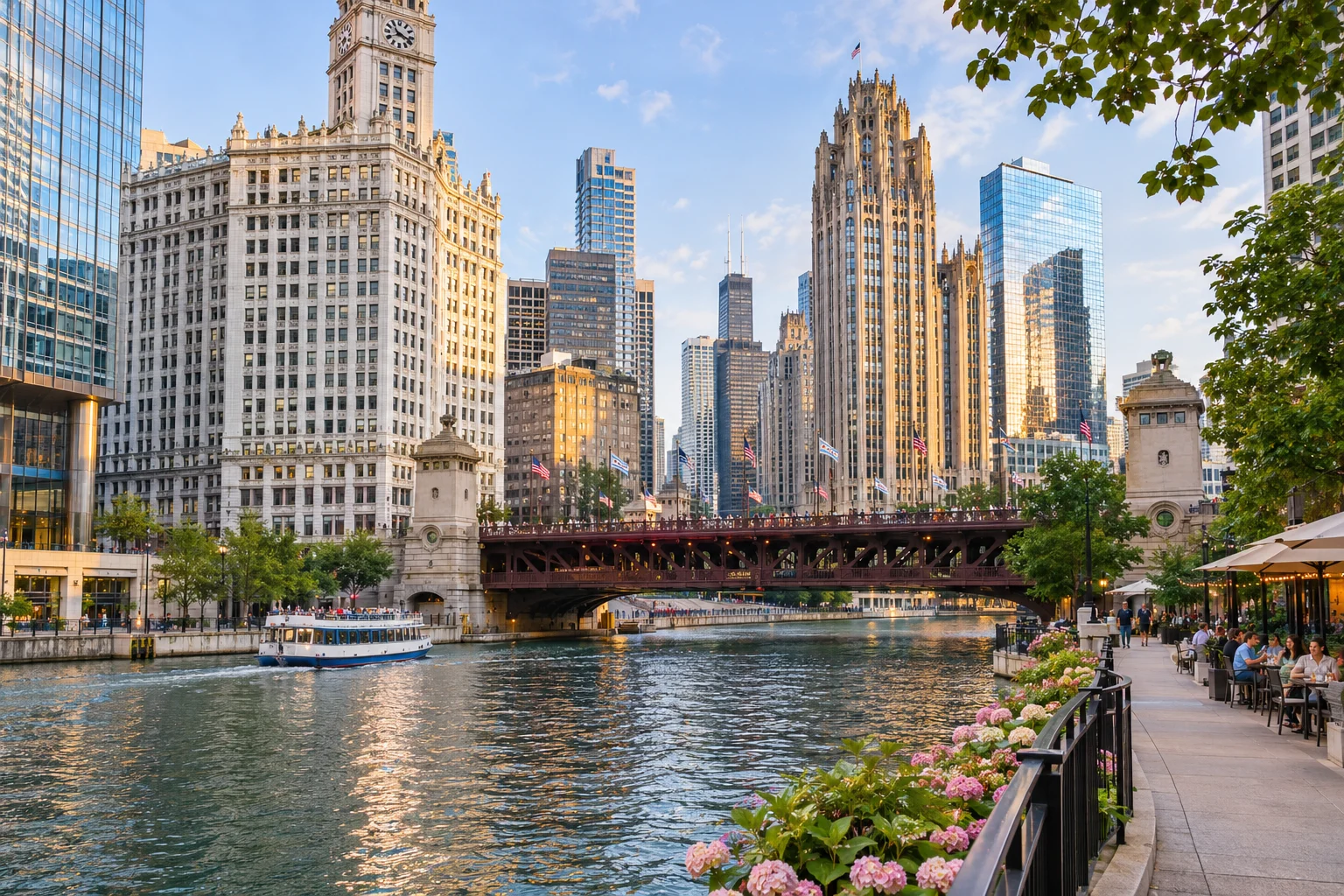
River North is north of the Chicago River, with a mix of hotels, galleries, restaurants and nightlife. It can be an easy choice when your itinerary includes a river cruise and more than one evening meal nearby. A hotel near the river reduces the effort of getting out for an early walk, while one farther north can be better for a specific restaurant or Red Line trip. Cruise operators use different boarding points. Map the dock shown on your ticket, including which side of the river it sits on and how to reach river level if needed.
When you compare rooms, ask about street exposure if you are a light sleeper. A lively block may be convenient for a group that plans to go out, while someone waking early for a museum entry may prefer a room away from the street. Calculate the walk back across a bridge if you expect to spend the evenings south of the river instead. In cold or windy weather, distance across the river can feel different than it looks on a map. A central room makes the most sense when it simplifies several outings over the course of the visit.
Streeterville and the Magnificent Mile for lakefront time
The Michigan Avenue shopping corridor and the Streeterville blocks to its east are useful if your trip includes shopping, the lakefront, Navy Pier or the Museum of Contemporary Art. Think about which of those is the real anchor. A room near Michigan Avenue can make sense for shopping and dining. A property farther east can be handy for a morning by the water. That eastward distance may also add time to rail trips. Use CTA’s planner and check bus routes as well as train stations when comparing two properties.
Check the route from your hotel to the lakefront rather than treating the blue area on the map as the entrance. Major roads, parks and grade changes can affect where you actually cross. If you travel with a stroller, look for a path that works in both directions when you are carrying bags or getting back near bedtime. On a short visit, consider saving the lakefront for the clearest part of the forecast and using the rest of the neighborhood for a slower lunch or an indoor stop. That flexibility is a good reason to choose a base near two kinds of activity.
West Loop for a food-centered stay
West Loop and Fulton Market put restaurant plans at the heart of the trip. A hotel here works when you want to have dinner nearby and are happy making a separate trip to the park, Art Institute or lakefront. Map the return from the last thing you will do during the day. Depending on the hotel, a CTA ride, a walk over the river or a short car trip may be easier. If you have only one West Loop reservation and expect to spend the rest of your time around Millennium Park, compare the single dinner transfer with two days of museum commutes.
A weekend around food can take a gentler shape. Reserve the dinner that brought you to the neighborhood, leave the first evening flexible and keep breakfast near your lodging. That leaves time for galleries, coffee or a walk before heading downtown. Check the hotel’s nearest rail and bus stops at the hours you expect to travel. If you will arrive at Union Station, verify the exact walk. A room described as close to the station can still sit on the far side of a busy road or several blocks from the exit you intend to use.
When to look beyond downtown
Lincoln Park makes sense for visitors who want the zoo, neighborhood streets and a slower start. A stay near a specific train station can work for travelers who are comfortable riding downtown for museums. Hyde Park is worth considering if your visit centers on the University of Chicago or nearby museums. Plot the trip to a downtown evening activity and check the return schedule before you book. Some routes use Metra or buses, and a hotel’s distance from the rail line does not describe the entire door-to-door trip.
For an event weekend, match the base to the actual venue. A hotel near a theater is useful when the show ends late. A room near a conference venue can make sense even if you take transit to everything else. Compare full prices, including taxes, property fees and parking, and check whether you need a car at all. If you have a car for a longer Midwest trip, parking at the hotel or returning it before the city portion can change the comparison. Ask about luggage storage if you arrive before check-in or have a late departure.
The simplest way to decide
For two days centered on the Art Institute and downtown architecture, compare the Loop and River North first. If dinner is the fixed appointment each night, price West Loop. If the lakefront is where you want to start and end the day, include Streeterville. Test the airport trip and any step-free needs before paying. Then choose the address that gives you the shortest, clearest journeys when your group has luggage, a deadline or very little energy left. That can be a more useful standard than any neighborhood ranking.