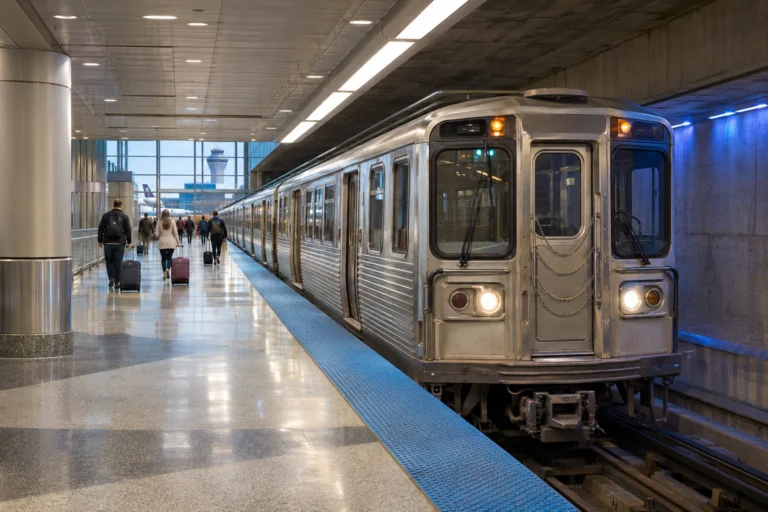

Choose your transfer from San Francisco International Airport by looking at the final approach to your hotel. BART can be convenient when the accommodation works well from a station. A taxi or rideshare can save a second connection, especially when your destination is farther from the rail corridor or your party has substantial luggage. SFO’s AirTrain and BART have different jobs in the journey. Understand where one ends and the next begins, then compare the total trip with a direct ride.
Pick a transfer using your hotel address
| Hotel or arrival situation | What to compare first |
|---|---|
| Hotel close to a downtown BART stop | Price BART per traveler. Check the station exit and walk to the entrance using the luggage you will actually carry. |
| Hotel near the Wharf or up a steep hill | Price a direct ride against BART plus the final connection. Include waiting and walking time on both routes. |
| Late arrival or several travelers | Check the last usable train from the airport, then compare the group’s rail fares and onward costs with a direct ride quote. |
Save both the hotel’s street entrance and the airport pickup instructions offline. A short walk on the map can include a grade or a station exit that changes the calculation. SFO rail connection checked November 11, 2026 against BART’s airport guide.
Find the airport connection before choosing the city train
SFO describes AirTrain as its on-airport people mover. It links terminals with other airport facilities, including the BART station, and its Blue Line also serves the Rental Car Center. BART is the service that takes you beyond the airport toward San Francisco and other destinations. Save both names in your route note so that following the first set of airport signs does not feel like boarding the wrong system.
After collecting your bags, check the airport’s current instructions from your terminal to BART. The station is on the International Terminal’s G Gates side, and AirTrain provides connections from the terminals. Check any service advisory before deciding which AirTrain platform to use. A normal route map is a useful starting point, but maintenance can alter the trip. Give yourself time to read the displays and ask for help if the direction is unclear.
Map BART to the accommodation, not just downtown
Enter the actual hotel entrance in a journey planner and compare the final station with the hotel’s own arrival advice. A central hotel near Market Street can produce a different route from a waterfront hotel or a property in another neighborhood. Look at the walk, street crossings and any hills as well as the train segment. If the walking distance is manageable with your bags, rail becomes a clearer option. If you already expect to book a car after the train, include that second ride in the comparison.
For a first visit, write down the station name and a nearby landmark before leaving the airport. Large stations may have several exits, and choosing the wrong side can add an unnecessary walk with luggage. If an elevator is important, check accessibility and the day’s elevator information. Plan an alternative exit or service when necessary. A hotel receptionist may also be able to suggest which station exit gives guests the easiest approach.
Payment and service checks
Use BART’s current instructions to choose how to pay. SFO’s public transit page lists contactless adult-fare payment and Clipper among the options, but you should check which method fits every traveler in your party. Decide before reaching the gates how children or travelers using a concession will pay. Keep the method accessible throughout the journey, and maintain enough phone battery if you rely on a mobile wallet.
Check the departure you expect to use rather than assuming trains are available whenever a flight lands. AirTrain’s airport service and BART’s regional service have different operating arrangements. Your likely departure from the terminal matters more than the flight’s touchdown time. Allow for baggage collection and any arrival formalities, especially if you are comparing a late-evening train with a road transfer. Save one alternative before you travel so you can make a calm decision if the flight is delayed.
When a taxi or rideshare simplifies the trip
A direct vehicle is worth comparing for a group, for a hotel far from BART or for an arrival when the rail connection has little margin. Use SFO’s ground transportation page for current pickup instructions. Airport pickup areas vary by service and terminal, so follow the instructions for the service you booked. Do not assume the nearest curb is where the driver can meet you. Check the app or booking message before moving your bags out of the terminal.
For a taxi, use the airport’s designated arrangement and give the driver the exact hotel address. For a rideshare, confirm the car and pickup location using the provider’s process. Include the number of travelers and bags in your vehicle choice. A group can fit on paper but still need more luggage space than the smallest vehicle provides. If you need an accessible vehicle or a child seat, look into the appropriate service before arrival and confirm the arrangement directly.
Three hotel examples to think through
For a hotel close to a useful BART station, compare the direct rail journey and final walk with the full car fare. A traveler with one small case may find rail straightforward, especially if the route requires no city transfer. Keep your first afternoon modest so that you can drop bags, eat and explore nearby streets without another long journey.
For a Fisherman’s Wharf hotel, calculate the connection after the regional train. Look at the local service or car ride that completes the route and include the time needed to change. A direct road transfer may become more attractive for several people with luggage. For a smaller hotel in North Beach, Hayes Valley or the Mission, compare the exact block and evening arrival arrangements. A neighborhood name does not tell you whether your particular property has an easy walk from a station.
Do you need a rental car on arrival?
If San Francisco is the first stop on a longer California trip, compare collecting the car immediately with collecting it when you leave the city. Look at parking charges at the hotel, the pickup location for the rental and the route for your first driving day. Keeping the car for days when it will sit in a garage can be less practical than using transit or occasional rides within the city.
If you do collect a car at SFO, save the Rental Car Center instructions separately from the BART route. Check your operator’s counter hours and after-hours arrangements if the flight is late. If you collect later in the city, confirm the branch hours on your actual departure day and include the time needed to reach it from your hotel. Choose the option that makes the whole trip easier, including the return location and any one-way rental conditions.
Return to SFO without a rushed final morning
Work backward from the airline’s recommended airport arrival time and allow for the full hotel-to-terminal route. Recheck BART service and any airport transfer advisory before departure. A route you used comfortably at noon on arrival may run differently early in the morning or during planned works. Keep a road alternative for any departure with a narrow service window.
Before leaving the hotel, confirm the airline and terminal and check that your payment method and route note are accessible. If you are taking a car, use the pickup place recommended by the hotel so that the driver does not need to circle the block while you wait with bags. Build in time for check-out and collecting stored luggage. Your trip starts at the accommodation entrance, which is where the return plan needs to begin too.
Frequently asked questions
Is AirTrain the same as BART? They serve different parts of the trip. AirTrain connects airport facilities, while BART takes you into the regional rail network. Follow the signs for the BART connection if that is your chosen route.
Can I choose my transfer after landing? Yes, if you have saved the main alternatives and their operating requirements. Check live service and the current pickup instructions before committing. Avoid making the decision solely from an old screenshot of a timetable.
Which option is best with several bags? Compare the final walk and transfers with a suitable direct vehicle. The most convenient option depends on what your party can carry comfortably, not just the number of train stops.