Choose the right Surfliner trip for your available time
| Decision | How to plan it |
|---|---|
| A one-way city transfer | Use the train as your main move and build the day around a single station-to-hotel route. |
| An overnight in Santa Barbara | Protect one daylight arrival and map the hotel to the station with luggage. Save a short activity for the arrival afternoon. |
| A round trip on one day | Check both directions before paying. Verify whether a rail segment is replaced by a bus and choose a return that leaves a useful block at your destination. |
Pacific Surfliner schedules and service updates
A Pacific Surfliner trip can be a one-way ride between California cities, a car-free beach weekend or part of a longer itinerary. The route serves San Diego, Orange, Los Angeles, Ventura, Santa Barbara and San Luis Obispo counties. Some trips run between San Diego and Los Angeles, while a smaller selection extends up the coast. The best way to choose a ride is to decide what you will do after stepping off the train. San Diego and Santa Barbara can both work as overnight destinations, and Los Angeles is useful as a destination or as a connection. Start with the stations and the actual schedule for your date.
First check whether your trip runs entirely by train
Use the operator’s schedule and alerts together. The schedule shows the trips that are planned. The alerts explain temporary changes such as work windows, stops that are skipped and segments replaced by buses. The schedule page can display an emergency bus bridge separately from the regular timetable. On affected dates, verify where the bus boards, whether the train continues at the other end and how much time the transfer takes. If the ocean view is the reason for traveling, identify which rail segment you want to ride and check whether it is operating before buying a room or making an onward reservation.
An itinerary can also include an Amtrak Connection bus as part of the regular service. Read each line of your booking, including train or bus numbers and arrival stations. A one-seat ride and an itinerary with a change may look similar in the search results. Make a note of the station where you actually need to go, and whether you need to collect and carry bags between vehicles. A daylight itinerary with time at the destination can be more satisfying than a technically faster departure that leaves you looking at a dark window or waiting through a tight transfer.
San Diego to Los Angeles for a first ride
Santa Fe Depot puts you near the San Diego waterfront and central neighborhoods. Old Town is a distinct stop and can be useful if your lodging or onward connection is in that part of the city. Compare the entrance you will use with the address on your ticket. Travelers coming from San Diego International Airport should plan the airport-to-station segment separately and leave time for baggage claim. When heading the other way, decide whether you want to end the train ride near downtown or closer to your next activity, then check that your chosen train serves the station.
Los Angeles Union Station is the central transfer point for many visitors. Look up the next leg before arriving because some destinations involve a walk, a local rail ride or a bus. A downtown Los Angeles weekend can start with a short outing near the station, then move on after hotel check-in. If Union Station is a connection for a separate ticket, leave room for delays, platform changes and finding the departure area. Consider staying overnight before a flight or an event you cannot miss. A rail schedule is a poor place to hide all the spare time in an otherwise fixed itinerary.
Santa Barbara for a car-free overnight
Santa Barbara’s train station is close to the lower end of State Street and the waterfront area. It is a practical arrival for a trip based around the beach, harbor and nearby restaurants. Look at how far your hotel sits uphill from the station and whether you will be carrying luggage. For a one-night trip, staying near the places you plan to spend the evening gives you more time on foot. A hotel farther up State Street may suit a different weekend, especially if the sights you want are inland or you have a clear plan for local transportation.
Give yourself time to walk toward Stearns Wharf or the harbor after arriving. On a late arrival, pick one direction and save the other for morning. On the return day, check out, ask if the hotel can hold bags and leave a buffer for lunch and the walk back to the station. If your ride goes farther north, check the station and service segment independently. The Santa Barbara plan works because the station and waterfront are close. A different stop calls for a fresh look at where the station sits relative to the things you want to see.
Choosing a daylight departure and a seat
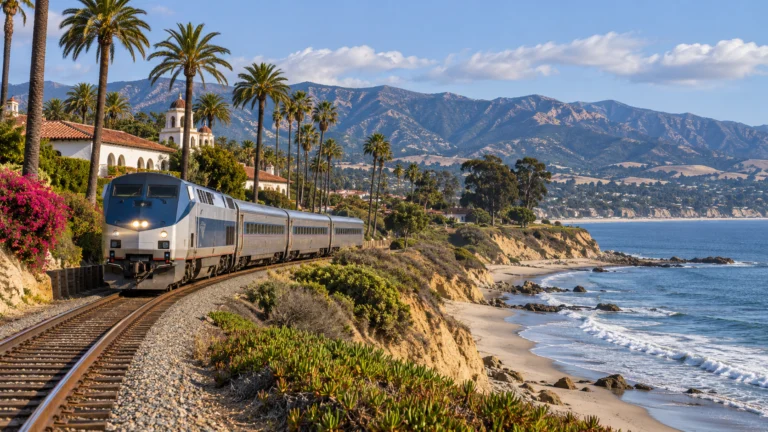
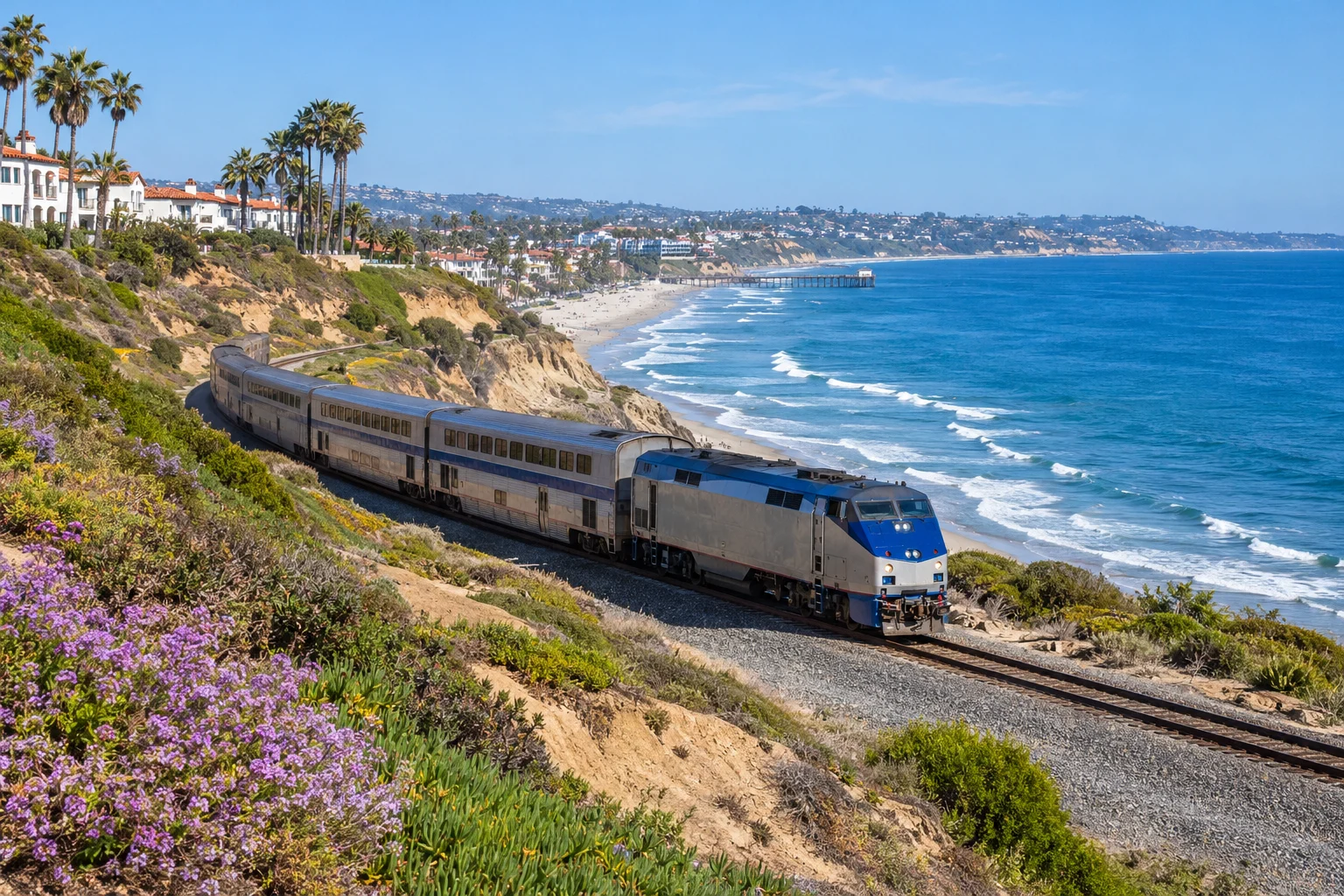
The route runs along the Pacific in several places, with stretches through cities, inland neighborhoods and agricultural areas in between. Where the tracks hug the coast, the ocean is generally to the west. That usually means the left side facing forward northbound and the right side southbound, though seating orientation and availability vary. Sit together if that matters more to the group than the view. On a bus replacement, road geography and the seat you get can produce an entirely different experience. Avoid booking a trip on the assumption that every mile offers an uninterrupted shoreline.
Think about where daylight falls during the trip. A departure before dawn can get you more time at a destination, but the landscape may be invisible at the start. A late-afternoon trip may bring low sun and reflections on the glass. For photography, keep your lens near the window without pressing against it and expect some frames to show glare. Keep bags within the space designated for them. Consult the operator’s baggage and bicycle pages before bringing oversized luggage or a bike, and check requirements again if the trip includes a substitute bus.
One day, two days or a longer route?
For a one-day outing, choose a station where you have several workable departures and a destination that can be explored near the station. Count the time between arrival and the last return option you are comfortable using. An overnight lets you use the afternoon and the next morning at a slower pace, with room for a restaurant reservation or a change in weather. It also lets you use one train for daylight scenery and another for the convenient arrival time. If you want both Los Angeles and Santa Barbara, a night in each is often easier to plan than trying to make a single trip serve as a tour of both.
If you are starting in San Diego and ending in Santa Barbara, search the full route first and see which departures run through. Then compare an itinerary with a deliberate Los Angeles stop. The extra stop makes sense if you want time there or if schedules align better when you split the visit over two days. Check fare conditions before leaving a train mid-trip and expecting to resume later. Use separate bookings or a supported itinerary when you intend to spend time at an intermediate destination.
What to check before leaving for the station
Keep the ticket, station address, latest service notice and lodging address handy. Check the operator’s rules for boarding, bags and bicycles, then identify the exact stop where you will meet anyone picking you up. For your return ride, check the service again on the day of travel. The most useful planning sequence is to confirm rail versus bus, choose your station based on the next leg, and fit the day’s activities around a comfortable arrival and departure. That leaves time for the reason you chose the Surfliner in the first place: seeing Southern California at a pace you can enjoy.