
Choose a Great Falls outing that fits the group
| Decision | How to plan it |
|---|---|
| Just the falls | Start with the Virginia park entrance and the overlooks. Check the official viewing guide for the approach that matches the group. |
| Falls and canal history | See one or more overlooks before deciding whether there is time for the canal path. Allow for the return to the parking area. |
| A longer hike | Check the park’s hiking page for terrain and conditions before adding the River Trail. Keep an overlook-only version available. |
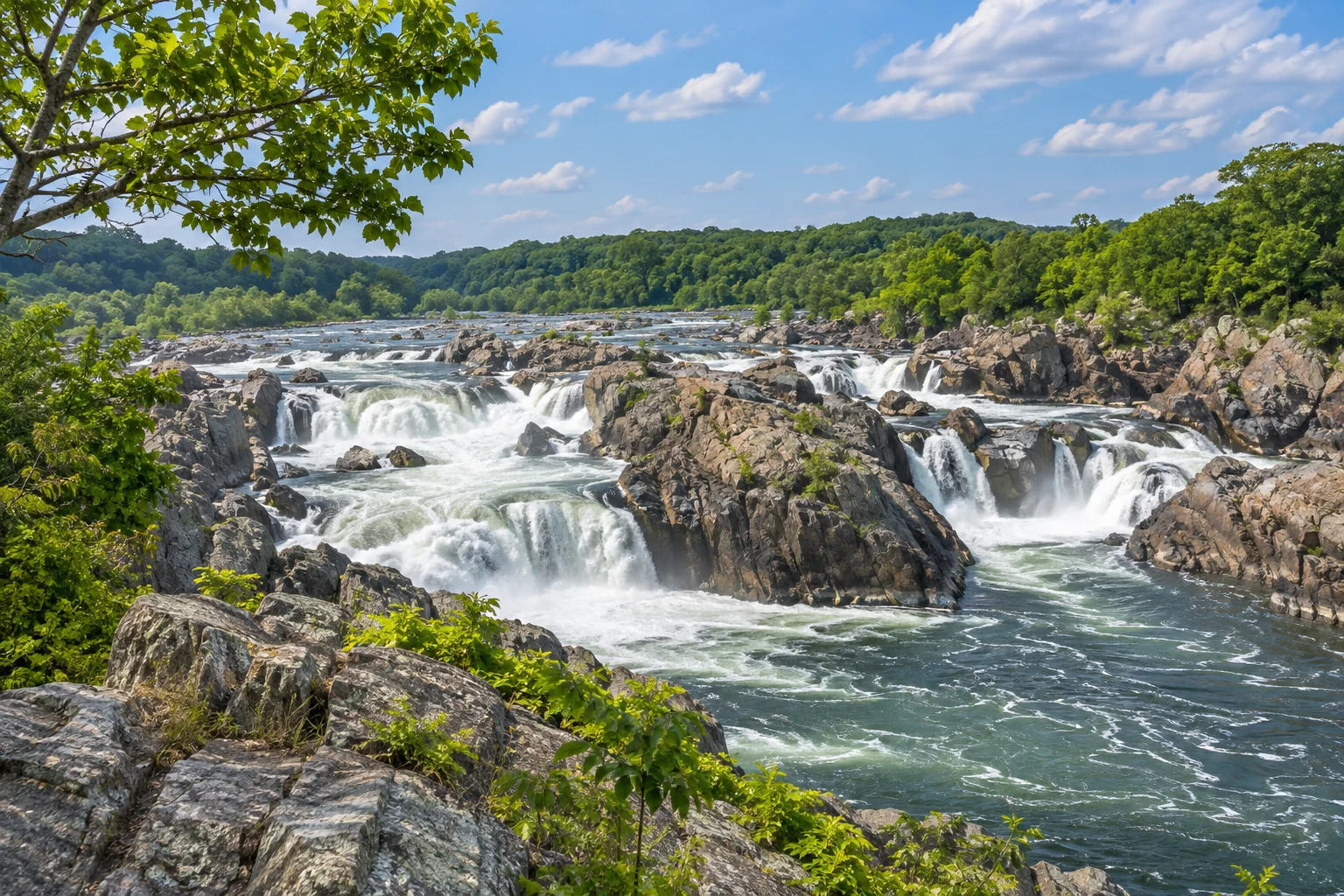
For a first visit to Great Falls Park in Virginia, make the overlooks the main outing and add a short walk on the Patowmack Canal Trail if the conditions and group suit it. You can see the Potomac from several angles without committing to the more demanding riverside trail. Start by choosing the Virginia entrance and checking the park’s current notices. Leave space for a pause at the overlooks, because the river is the reason to come and the best part of the visit often takes place while you are standing still.
Choose the Virginia side before setting out
Great Falls Park is on the Virginia side of the Potomac. The National Park Service identifies the viewing area across the river as part of the Chesapeake and Ohio Canal National Historical Park in Maryland. These are separate outings, and the park says there is no bridge connecting the two park areas. If your travel companions send you a trail name or a map pin, check which side it is on. Use the official directions for the park you intend to visit rather than relying on a generic search for Great Falls.
Plan the drive and entrance for your actual date. The park advises visitors to expect delays on busy weekends and holidays. Check the current hours, entrance arrangements and payment options before leaving. Build some arrival margin into the day, especially if you have a meal or another appointment afterward. If you are arranging a ride rather than driving yourself, plan the return pickup before entering. The park warns that reception may be weak, so save the necessary directions and meeting details offline.
Begin with one overlook that suits the whole group
The park describes three falls overlooks within a short walk of the visitor center. Overlook One has steps and rocky footing. Overlooks Two and Three have ramp access and gravel approaches. Check current accessibility information and the route from the parking area before deciding which is the easiest for your group. The best first stop is the one that gives everyone a comfortable opportunity to see the river.
On reaching an overlook, leave time to watch the water and take in the scale of the gorge. Move through the viewing area considerately and give people room at the railing. Keep children with an adult and stay inside the designated barriers. The park prohibits swimming and wading. Follow signs and ranger instructions and keep the visit focused on the overlooks and established trails. A different angle is easy to find from another public viewing point when conditions allow.
Compare the views without racing between them
If the first overlook works well and the group wants more, walk to another open viewpoint. Look at how the river changes from one position to the next and notice the rock shapes that are harder to see from a single angle. A short itinerary can still be rewarding when it allows time to stop and observe. Use a clear meeting point if one person needs to rest while others continue, and agree when the group will return to that spot.
Consider how the weather affects the pace. Rain or cold can make a short walk feel longer, and a busy viewpoint can take time to move through. If the first view is enough, stay there a little longer and take a break afterward. If everyone wants another perspective, choose it by the route and footing rather than automatically completing all three stops. The overlooks are close enough to compare, but your group does not need to treat them as a checklist.
Add the Patowmack Canal Trail for history
Use the park trail information to decide how much of the Patowmack Canal Trail to walk. The NPS describes an easy route that follows historic canal remains, with the section to the Guard Gate identified as accessible for wheelchairs and strollers. Verify current access and surface conditions before choosing an approach. Look for interpretation that explains why a canal was built here and how the route relates to the river. The walk offers a useful change of focus after the viewpoints.
Make the canal outing an out-and-back unless the group has a clear alternative route on the official map. Choose a turnaround that leaves time to return before the park closes and before anyone gets tired. Give yourself time to read a sign or pause at a feature. If your party includes children, ask them to imagine what a canal needed to do in a landscape like this. A short conversation at one stop can make the history more memorable than reaching every point on the map.
Treat the River Trail as a different hike
The NPS describes the Virginia River Trail as moderate to hard, with sections near cliffs and some scrambling. This is a different choice from a short overlook and canal visit. Check conditions, your group’s abilities and the park’s trail guidance before adding it. Wet or icy surfaces can make the route more difficult. Keep it out of a first half-day plan if the group expects a straightforward stroll or needs stroller or wheelchair access.
If a member of the group wants a more demanding walk, make it a separate outing with an appropriate plan and equipment. Agree on a clear meeting location and return time if anyone stays behind. Save a map and allow for weak reception. For a mixed group, the overlooks and a suitable canal segment provide a shared itinerary without putting pressure on anyone to follow a route that exceeds their comfort or ability.
Plan a meal, a weather alternative and the return
Before arriving, identify where you will take a break and check the park’s current visitor information. Bring the water and clothing you need for the conditions and choose a place for lunch that fits the route. If the park is busy, the return to your vehicle may take longer than the walk itself. Build a small margin between the final viewpoint and the next appointment. If you are heading into Washington afterward, check the route for the time you expect to leave.
If weather or an alert makes the trails unsuitable, use the open viewpoints only when the park says they can be visited, or choose a separate outing. Check the latest notices before driving. A short visit can be the right choice when the views are good but the walking conditions are poor. If the park itself is unavailable, decide on the next plan before setting out and leave the other riverbank for a day when its separate access also fits your trip.
Frequently asked questions
Which overlook should I choose first?
Check the surface and access needs of your group. Overlooks Two and Three have ramp approaches. Overlook One involves steps and rocky terrain.
Can I walk across to the Maryland side?
The park says there is no bridge connecting the two parks. Plan separate access if you want to see the other side.
Is swimming allowed?
The National Park Service prohibits swimming and wading in Great Falls Park. Enjoy the water from the designated viewpoints and follow posted rules.
Is half a day enough?
It is enough for an overlook visit and a short walk when arrival and conditions cooperate. Save longer or more demanding trails for an outing built around them.


