
DESTINATION GUIDE · NATIONAL PARKS
Yosemite for First-Time Visitors: A Three-Day Planning Guide
Travel in the USA Editorial · Reviewed November 3, 2026 · 1063 words
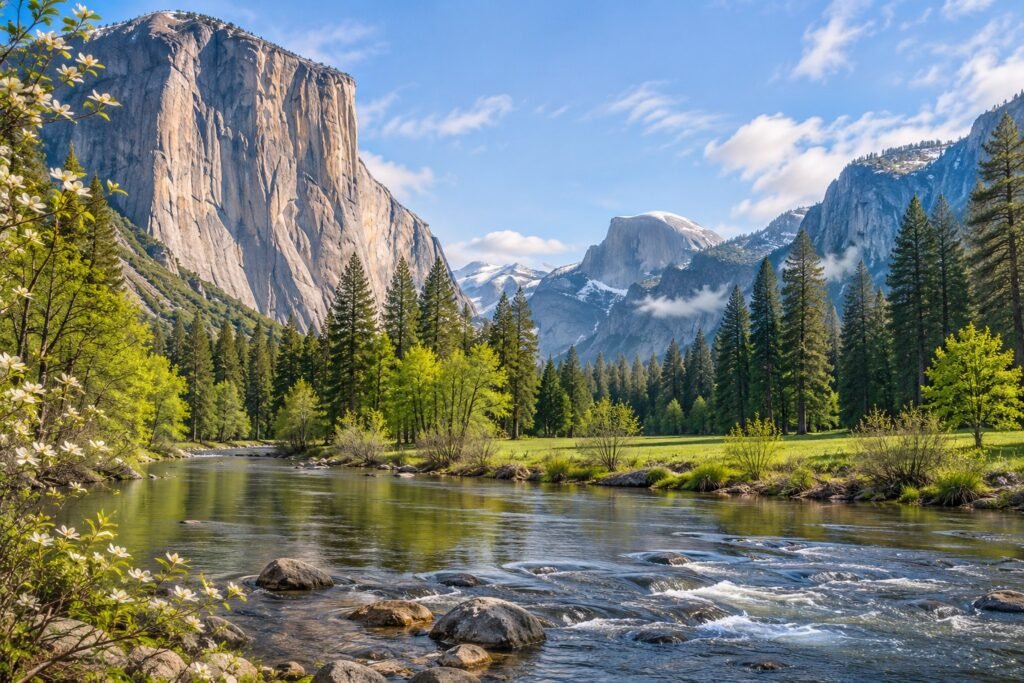
Yosemite is easier to enjoy when you stop treating it as a list of famous photographs. A three-day stay gives you time to settle into the valley, choose a walk that suits your ability, and add a second area if seasonal access allows. The best itinerary depends on where you sleep, which roads are open, and what everyone in your group can comfortably do. This guide offers a flexible framework for a first visit rather than an all-season promise that every attraction will be available.
Start with the season and the overnight base
Choose your travel dates before choosing hikes. A route that looks straightforward in a summer photograph may have a very different status in another season. The National Park Service’s planning page links to current conditions and specifically advises visitors to check road status. It also notes that phone service is limited and recommends downloading park information for offline use. [1] Make those checks part of planning, not something to do for the first time at the entrance.
Next, choose accommodation according to its actual relationship to your plans. Staying in Yosemite Valley can reduce repeated travel for a valley-focused visit; a gateway community may offer a different price point or room choice. Compare the full driving route rather than the distance to a park boundary. If you will travel in and out each day, account for that time when deciding how ambitious your sightseeing can be.
Understand what each reservation does
Entry arrangements, lodging, campgrounds, and particular hiking permits are separate matters. The NPS reservation information reviewed for this guide states that a timed entrance reservation is not required for 2026; that statement does not establish the rules for a later year or replace any other required booking. Check the official page for your actual travel dates before making final plans. [2]
Do not assume a hotel booking provides permission for every activity you want to attempt. Likewise, a park entrance pass is not a campsite reservation. Keep a simple list of each booking, its cancellation terms, and any identification or confirmation you need to carry. Store the details offline. Clear administration at home makes it easier to stay flexible when weather or traffic changes the shape of a day.
Day 1: get oriented in Yosemite Valley
Use arrival day to understand the valley’s layout and enjoy a short, manageable outing. Choose a developed viewpoint or walk based on current ranger guidance and the conditions that day. Leave a generous margin for entrance delays, parking, and finding your accommodation. If you have driven a long distance, a relaxed first afternoon is a better investment than a strenuous hike begun later than intended.
Pick a small number of stops with time to appreciate them. Photographing a granite wall, sitting near a meadow, and learning about the landscape can be enough for the first day. Keep away from river edges and waterfall hazards, and remain on appropriate routes. Resist the urge to follow a crowd toward an unfamiliar shortcut. A clear return plan is more useful than squeezing in one final unplanned viewpoint before dinner.
Day 2: one main walk, with an honest turnaround plan
Make your second day the main activity day. Choose a route after checking distance, elevation change, surface, exposure, and current closures. The right walk is one everyone can complete comfortably, including the return. Pack for the full outing and agree on a turnaround time before starting. If someone is tired, uncomfortable, or no longer enjoying the experience, shortening the walk is a sound planning decision.
Keep the afternoon lighter. A substantial morning walk can be followed by a scenic stop or time around your accommodation, rather than another demanding trail. Travelers who prefer a less active holiday can use the same structure with shorter walks and a ranger program when available. Yosemite does not require an athletic itinerary to be rewarding. Give yourself enough space to notice the landscape rather than concentrating entirely on the next destination.
Day 3: add a second area only when access supports it
For the final day, investigate a different part of the park that is open and sensible for your route. Depending on seasonal access and your interests, that may mean a grove, a high-country area, or another developed scenic drive. Confirm the current road situation and the actual return journey. Do not build a departure day around a distant attraction simply because it appears on a best-of list.
If conditions are poor or a route is closed, use the day to revisit a favorite valley area at a quieter time. Returning somewhere can be more satisfying than collecting another stop. Keep a practical margin for the onward drive, particularly if you have a flight or a nonrefundable booking afterward. Consider a gateway overnight rather than combining a full park day with an exhausting late transfer.
Lodging, meals, and practical preparation
NPS describes a range of in-park lodging types and strongly recommends reservations, particularly during busy periods. It also points travelers toward neighboring communities when park accommodation is unavailable. [3] Choose based on comfort, location, and the experience you want; a rustic option and a conventional hotel are not interchangeable simply because both appear under Yosemite accommodation.
Plan where you will obtain breakfast, packed food, and dinner, especially if staying somewhere without easy nearby services. Follow the park’s current food-storage instructions and never feed wildlife. Keep essential medication, water, an appropriate layer, and your route information with you. Check the forecast again before leaving the room. These ordinary preparations make a flexible itinerary possible and help you avoid wasting valuable park time solving problems that could have been handled beforehand.
Frequently asked questions
Is three days enough for Yosemite?
Three days allows a focused first visit with a valley introduction, one main activity day, and a flexible final block. Add time if your plans include longer hikes or several widely separated areas.
Can I use the same itinerary in winter and summer?
No fixed itinerary works unchanged across every season. Roads, trails, services, and conditions can differ. Use this framework, then select the actual activities through current official park information.
Should I wait for a cheaper room before booking?
Balance price against availability and cancellation conditions. A sensible, flexible reservation can protect your dates while you compare options. Do not assume that accommodation close to your preferred area will remain available.
Sources & planning updates
Sources reviewed November 3, 2026. Itineraries are editorial suggestions. Recheck official alerts, access rules, opening times, and booking conditions for your travel dates.