
DESTINATION GUIDE · NATIONAL PARKS
Yellowstone in Four Days: Geysers, Wildlife and a Realistic Route
Travel in the USA Editorial · Reviewed November 3, 2026 · 1106 words
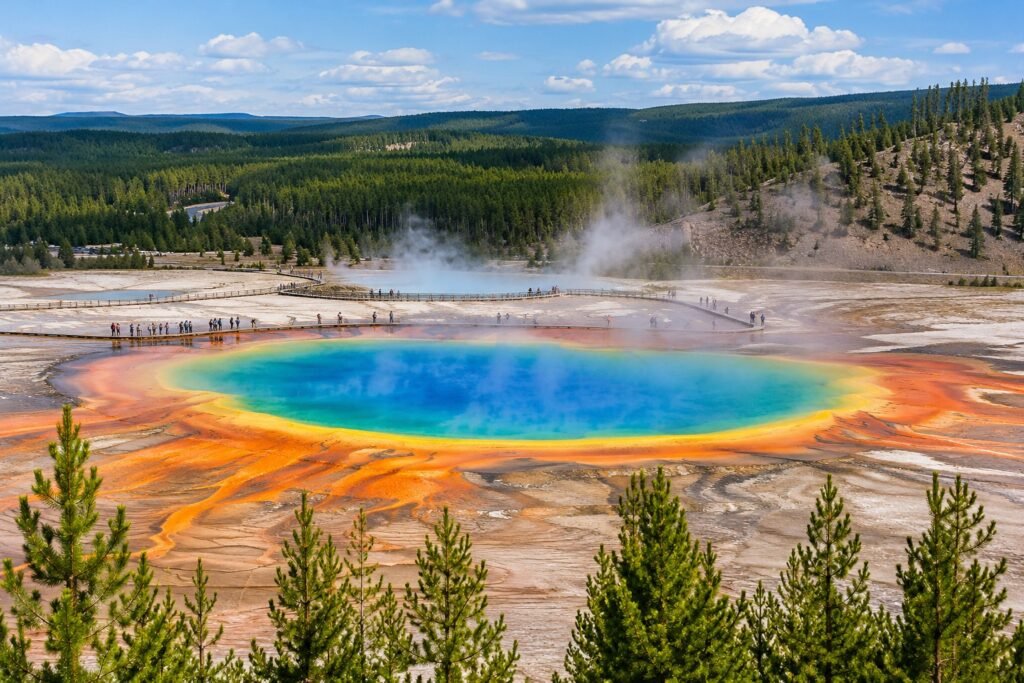
A Yellowstone four-day itinerary should be built around geography and patience. The park’s highlights are spread out, wildlife can interrupt the best driving estimate, and a geothermal area deserves more attention than a quick photograph from the parking lot. Four days gives you a workable first introduction if you accept that you will not see everything. This plan separates the main experiences into different days and treats wildlife sightings as a possibility rather than a product that can be guaranteed.
Check the season before drawing the route
Begin with the official park conditions and the opening arrangements for the roads and services you intend to use. The National Park Service warns that off-peak visits can involve limited facilities and road closures, with snow affecting spring and fall travel. Its planning page also explains that Yellowstone has five main entrances and spans three states. [1] The practical lesson is to choose an entrance that fits your route, not merely the one with the cheapest nearby room.
This itinerary is a framework for a road-access visit when the relevant areas are open. It should not be copied directly into a winter plan. Start with your arrival airport or previous overnight stop, then work through the actual road connections. Avoid pairing a full day in the park with a distant evening flight. A final gateway overnight can make the departure substantially calmer and gives you more resilience if a journey takes longer than expected.
Choose one or two useful overnight bases
For a short first visit, consider whether two bases would reduce repeated driving. A southern or western base may suit geothermal sightseeing, while another base may better support the northern part of your plan. Compare actual routes and accommodation availability before deciding. Moving every night creates its own cost in packing, checking in, and managing luggage; staying in one place can work if you deliberately limit the areas you cover.
Look carefully at meal arrangements, room type, and cancellation terms. Do not treat a campsite, a rustic cabin, and a conventional hotel as equivalent alternatives. If you stay outside the park, include the entrance journey in every day’s schedule. Keep your first evening simple and avoid an expensive activity reservation immediately after a long arrival drive. The point of the overnight plan is to protect time in the places you came to see.
Day 1: Old Faithful and a geothermal introduction
Give the Old Faithful area a substantial part of the day rather than treating it as a single timed stop. Check the current information available locally, explore appropriate boardwalks, and leave enough flexibility for the experience to unfold. Do not promise your group an exact eruption time from an old article. A relaxed visit with time to understand the surrounding features is more rewarding than arriving late and rushing straight back to the car.
Keep the rest of the day geographically modest. Choose another nearby stop only if energy and conditions support it. Thermal areas require particular care: NPS instructs visitors to stay on boardwalks and designated trails and not touch thermal features or runoff. [2] Keep children close and make the safety expectations clear before starting the walk. A landscape that looks solid or inviting is not an invitation to step beyond the developed route.
Day 2: another basin, with time to look properly
Use the second day for a different geothermal area that fits your overnight base and the current road network. Build the day around one main walk and one optional stop rather than a sequence of distant parking lots. Think about light, crowds, and the amount of walking your group actually wants. If a viewpoint or route is unavailable, use official local guidance to choose an alternative rather than improvising across undeveloped ground.
Allow a proper lunch break and keep food and belongings managed according to park rules. Have a weather alternative that does not require a complete cross-park transfer. A short visit to an interpretive area, time at your accommodation, or a slower return can all be sensible choices. Your holiday does not become less successful because you decide to spend longer at a place that interests you and skip another item.
Day 3: the canyon area and a change of scenery
Dedicate a day to the Grand Canyon of the Yellowstone area if it is accessible during your visit. Choose developed viewpoints and walks according to current conditions and your group’s needs. This change of landscape provides variety after two geothermal-focused days. Check the practical access to each stop, including steps, gradients, and the return route, rather than assuming a viewpoint label means effortless access for everyone.
Keep your afternoon flexible for a second viewpoint, a short walk, or a quieter stop on the return journey. Avoid stacking a strenuous hike on top of a day that already involves repeated getting in and out of the car. Travelers with children or mixed mobility levels may find a small number of well-chosen stops more enjoyable. Set a realistic dinner time and leave room for slower traffic on the way back.
Day 4: wildlife country without wildlife promises
Use the final full day for a northern area or valley that suits your route and current conditions. Bring binoculars if wildlife observation interests you, and allow time to wait quietly in suitable designated areas. No itinerary can guarantee particular animals or a close encounter. If wildlife is absent, the landscape and the experience of moving slowly should still make the day worthwhile.
Follow the park’s wildlife rules. NPS specifies at least 100 yards from bears, wolves, and cougars and at least 25 yards from other wildlife, including bison and elk. Back away if an animal moves closer, never feed animals, and do not block the road to create a viewing opportunity. [2] Use a long lens or binoculars instead of approaching. A photograph is never a reason to disturb an animal or ignore ranger directions.
Frequently asked questions
Is four days enough for Yellowstone?
It is a reasonable first introduction with selective priorities. It is not enough for every road, basin, and long hike. Add nights if you want a slower trip or to combine Yellowstone with another park.
Should I reserve a wildlife tour?
A suitable guided experience can add interpretation and simplify logistics, but sightings remain uncertain. Check the operator’s itinerary, group size, cancellation terms, and approach to wildlife before booking.
What should be on my daily checklist?
Check road and weather conditions, carry food and drinking water, download essential information, and confirm your next overnight arrangements. Follow current park advice for food storage and bear-country travel appropriate to your chosen activity.
Sources & planning updates
Sources reviewed November 3, 2026. Itineraries are editorial suggestions. Recheck official alerts, access rules, opening times, and booking conditions for your travel dates.