
Set your Space Center Houston priorities at arrival
| Decision | How to plan it |
|---|---|
| A particular tram tour matters most | Read its access instructions before buying admission. On arrival, check the day’s schedule and protect the tour window before planning galleries. |
| The preferred tour is unavailable | Use the day for two visitor-center priorities and any available tour that fits. Keep those indoor choices on the itinerary even when a tram is available. |
| A hard departure deadline | Pick a cutoff for joining a tour queue and schedule your last gallery near the exit. |
Check the operator’s or destination’s visitor information.
A first visit to Space Center Houston is easiest to plan around one question: do you want a tram tour to NASA’s Johnson Space Center, or is your priority the indoor visitor center? The tram tours have limited availability and different booking arrangements. If a particular tour matters, check its instructions before choosing your admission time and go to the correct check-in point when you arrive. If you are mainly interested in the artifacts and displays, you can build the day around the exhibits at your own pace. Give yourself time to do one of those things well and fit the other around it.
Buy admission and check tram access separately
Start with Space Center Houston’s current admission and NASA tram tour pages. Admission gets you into the visitor center for the visit you booked. A specific tour may have its own boarding pass or ticket process. The center describes its NASA Campus Tour as available to general admission guests on a first-come, first-served basis, subject to availability. Its published instructions direct visitors to Guest Services inside the center to secure a timed boarding pass. Read the current instructions for your date. If that process changes, use the information on your ticket and the venue’s signs when you arrive.
Other tour options can use different arrangements. Look at the exact title and description before assuming that every tram includes the same stops or that a boarding pass for one can be used on another. Johnson Space Center is a working NASA campus, so operational needs can affect availability and the spaces visitors see. A list of places associated with the tour is useful for choosing an experience. The live schedule is what matters for a specific day. If the museum lists an option to reserve a particular tour in advance, read the terms and plan your museum arrival around that reservation.
Make the first half hour count
Use the venue’s directions and parking guidance. It is in the Clear Lake area, so check driving time from your hotel or airport rather than assuming the trip starts in central Houston. Allow time to park, reach the entrance and go through any entry procedures. If you care about a first-come tour, choose an early entry slot that you can actually reach. When you get inside, take care of the boarding pass or check-in first. Write down the time and meeting place before looking at the exhibits. Give yourself a reminder well before boarding so you have time to finish what you are doing.
If the first available departure is later than expected, use the time for a nearby display, an early lunch or one indoor experience. Confirm where the tram leaves and how early you need to be in line. A timed boarding pass is easier to use when you have already found the area. For a group traveling separately, agree whether you will wait for everyone before collecting passes and check the venue’s rules. If a suitable time is unavailable, switch to the indoor plan instead of spending the whole visit waiting for an opening that may never come.
Understand Rocket Park before committing to the rest of the day
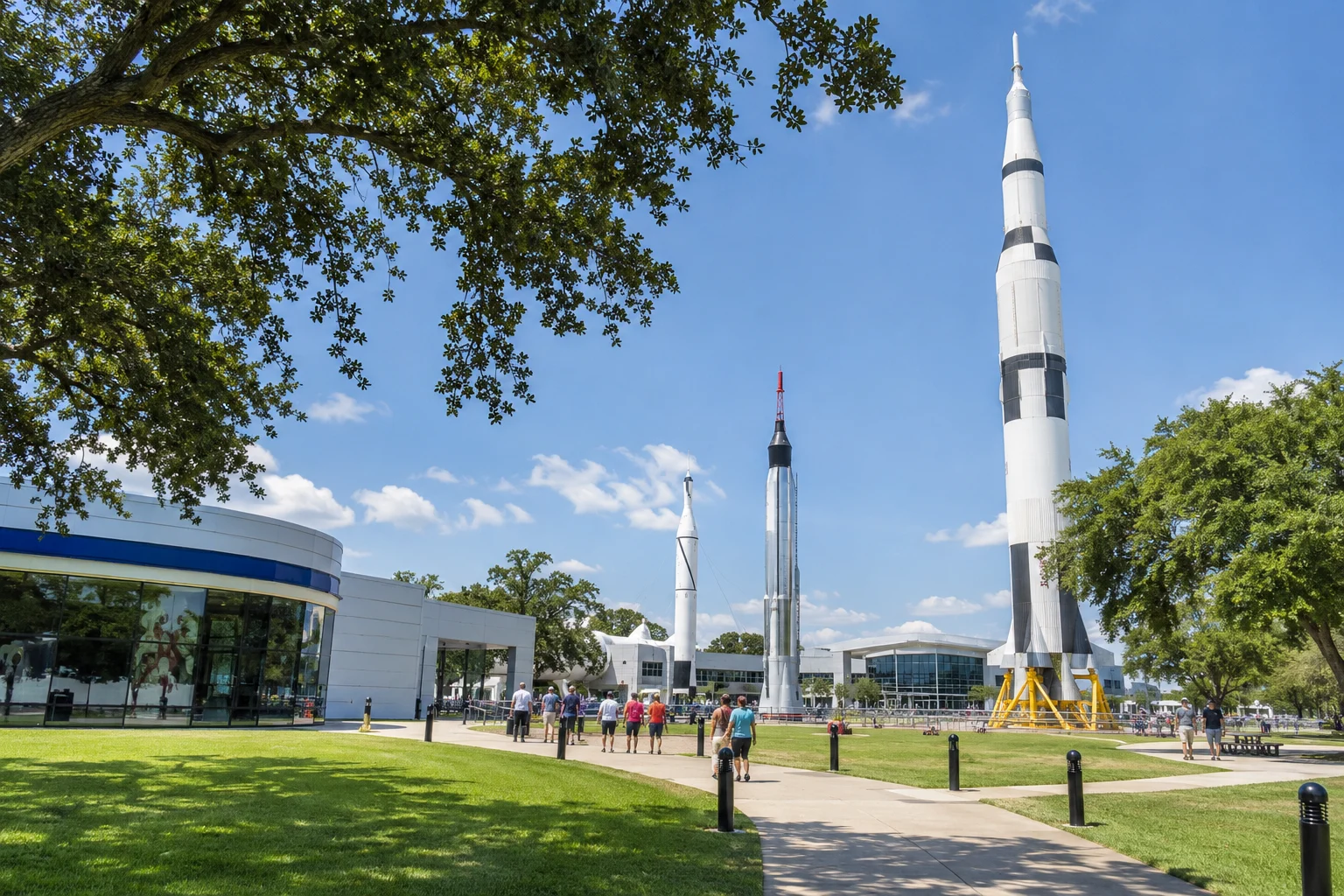
The venue’s Campus Tour description includes an option to stop at George W.S. Abbey Rocket Park, where visitors can see a Saturn V. Check the instructions for the day about stopping, continuing and returning. Allow time for walking, reading and any wait for transportation back. If seeing the Saturn V is important, ask how that stop works on the tour you booked. A traveler with a narrow time window may prefer to spend longer in the main center if the return timing is uncertain. Check outdoor exposure, weather and access details before you board, particularly with small children or someone with limited mobility.
When you reach a large exhibit such as the Saturn V, take time to look from several points. Its scale is easier to understand when you can compare the whole vehicle with one section or an individual component. Read how the vehicle was used and let a companion pick one question to answer from the exhibit. Photography can be part of the visit, but put aside enough time to look without rushing to catch the next transport. The return to the center should be part of the schedule from the beginning.
Choose two priorities inside the visitor center
Use the current exhibit list to pick a focus. A visitor interested in the Apollo era may want to look for the spacecraft and stories associated with those missions. A group interested in shuttle-era transport may choose Independence Plaza, subject to the day’s access and hours. Families can select one display or activity per child and use a break to decide what to see next. Check whether a presentation, simulator or add-on has its own ticket, age guidance or closing time. A large display can take as much time as several smaller ones if you want to read and discuss it.
If your tram is in the morning, spend the first part of the afternoon indoors and use lunch as a break between the two. If your tram is later, keep the first two exhibits near one another and leave extra time to get to boarding. When you are doing an indoor-only visit, start with the display you care about most and pick a second priority after you see how busy the center is. Check accessibility and the practical details of boarding or entering an exhibit directly with the venue if they affect your group. Choose a clear meeting place if people explore separately.
Leave room for travel at the end of the day
Avoid a close connection to a flight or a fixed appointment elsewhere in Houston. Give the last experience a firm finish time and allow for the walk to the car, traffic and any rental return or airport procedures. If you have only half a day, pick one tour if you can get a suitable slot, then see one or two displays. An indoor-only half-day is easier to time and can still be substantial. Decide in advance which outcome would make the trip worthwhile, then make that your first booking or first stop.
Before leaving for the center, verify admission, tour availability, parking and the travel time to Clear Lake. On arrival, handle any tram boarding pass first, then use the current schedule to choose the rest of the day. The useful planning distinction is between general admission and the specific experience you want to add. Once you know how both fit, the exhibits and the campus visit can complement each other without competing for the same hours.
Plan a visit that works for both children and adults
If you are traveling with younger children, ask how much sitting and standing the tram experience requires before making it the center of the day. Some families will get more from short indoor stops and a longer lunch. Older children can use the exhibit map to choose one mission or object to follow through the visit. If an adult has a particular tour in mind and someone else would rather remain inside, check whether separate plans are practical and pick a meeting point and time. That gives each person a part of the day to look forward to.