
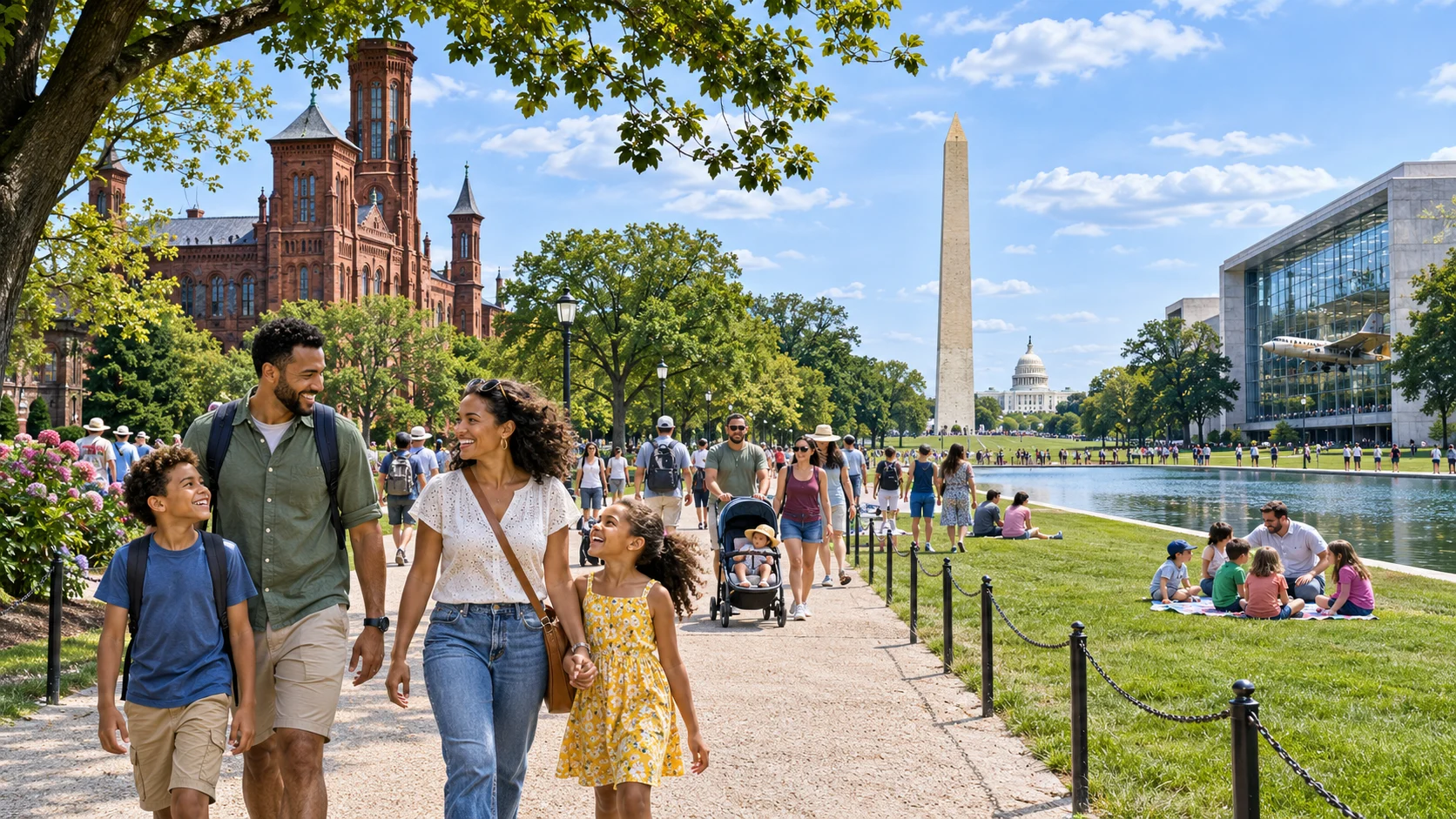
Give each child one Smithsonian priority
| Decision | How to plan it |
|---|---|
| First museum | Choose the exhibit the group most wants to see and confirm any entry pass before arranging the second stop. |
| Lunch decision | Compare the group’s energy with the walk and entry window for the next museum. Keep one short gallery as the afternoon goal. |
| A museum is full | Use a nearby alternative with confirmed entry, or spend longer at the first museum. Keep the return walk manageable. |
For one day at the Smithsonian with kids, pair the National Museum of Natural History with the National Air and Space Museum on the National Mall. Reserve your Air and Space entry first, then fit Natural History and lunch around it. A family that spends an hour with the dinosaurs and another hour with aircraft has already seen two distinct museums. Leave room to follow whatever captures your children’s attention.
Book Air and Space before setting the order
The Smithsonian’s Earth and Space family itinerary links to both museums and identifies the free timed-entry requirement for Air and Space. Confirm your reservation for the National Mall building in Washington, DC. The Smithsonian also operates the Steven F. Udvar-Hazy Center in Virginia, so check the venue name before sharing directions with anyone in your group. A map pin for the wrong building can turn a short walk into a completely different outing.
With an afternoon reservation, start at Natural History. With a morning reservation, reverse the order and keep the second half of the day open. Check both museums’ operating hours and current gallery information for the date of the visit. Let each child choose one thing to look for before you arrive. That makes it easier to decide what to skip when you are standing in a busy lobby and everyone wants to go in a different direction.
Natural History. Choose two exhibits rather than a floor-by-floor tour
Start with fossils if your children want to see dinosaurs. Allow them to spend time with one or two specimens rather than moving as soon as they recognize a name. Ask them to compare the shape of a tooth or the length of a limb. Older children may want to read about what scientists can infer from a fossil, while younger ones can choose an animal to remember. The exhibit becomes easier to share when each person has something specific to notice.
Pick a second gallery with a different pace. A child interested in the ocean may enjoy looking at how animals live at different depths. A child drawn to rocks and minerals might prefer a close look at a few specimens. Before moving between galleries, agree on a simple meeting point if your group gets separated. A visit that ends before everyone is tired leaves more attention for Air and Space after lunch.
Lunch. Leave time to cross the Mall
Give lunch a separate block on the schedule. The buildings are on opposite sides of the Mall, and walking between them includes getting out of the first building, finding a crossing and joining any entry line at the second. Add a margin if you have a timed pass or a family member needs a slower pace. Check museum rules for food and bags before packing a picnic. When the weather is pleasant, time outdoors gives children a change of scene between exhibitions.
On a hot or rainy day, keep the lunch plan close to the museums and check what is open before leaving the first one. If you are traveling with another family, agree on an arrival time at the second museum. A specific meeting point works better than trying to coordinate while one family is looking for lunch and the other is already in the entry line.
Air and Space. Follow one story about flight
Use the official museum map and current gallery list to choose an opening stop. If the children are interested in early flight, compare an early aircraft with something designed for a later purpose. If space exploration is the priority, let the group spend longer on a single mission or object. For younger children, pick a simple question such as what an astronaut needs to bring along. Older children can look for evidence of the engineering decisions that made a flight possible.
If you have time after that, let each child pick one last object or gallery. If the group is tired, finish with a walk outside instead of adding a third museum. The Mall offers a view of the scale and layout of Washington that complements a day indoors. For a family staying several days, leave the monuments or another Smithsonian museum for a separate outing.
Frequently asked questions
Can we do both museums in half a day?
Choose one as the main visit. A half day can work for a single museum and a short walk across the Mall. Two visits are possible if you keep both short and the entry time works for your group.
What should we check if we bring a stroller?
Review the museum accessibility and entry information, including which entrance to use and how to move between floors. Leave extra time for elevators and crowded galleries.
Which museum works best if we can only choose one?
Choose Natural History for fossils, animals or minerals. Choose Air and Space for aircraft and space exploration if you can secure the entry time you need. Let the children’s interests determine where you spend the day.


