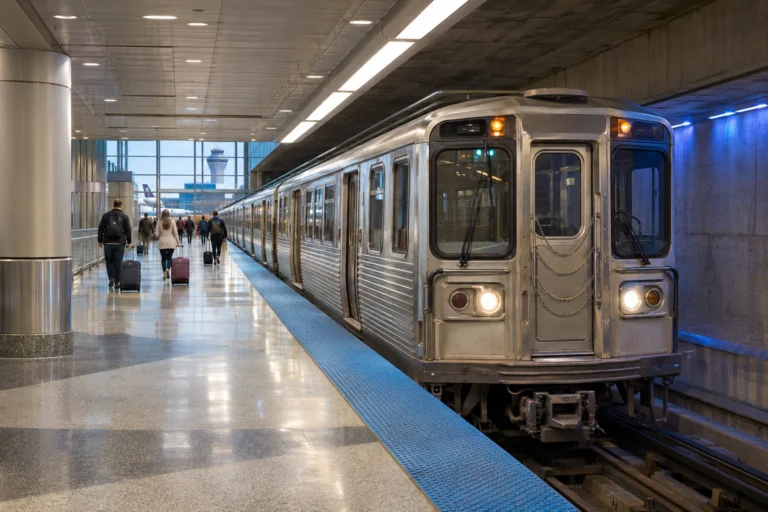
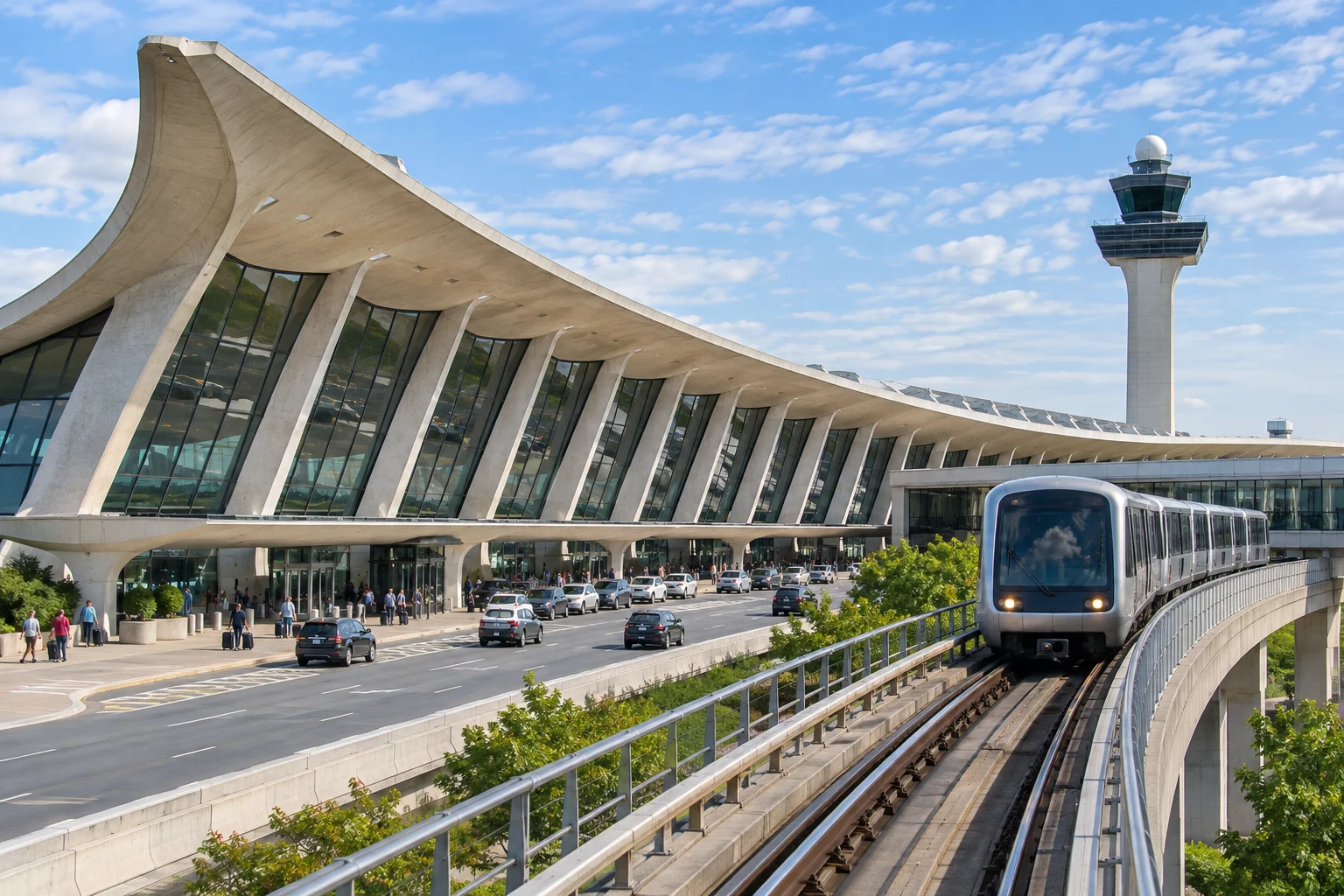
Choose your Dulles transfer door to door
| Decision | How to plan it |
|---|---|
| Hotel near a Metro station | Use the Silver Line as your first comparison. Check whether your final station requires a transfer and where you will exit. |
| Late landing | Look up trains for the time you expect to clear baggage claim. Keep a road transfer available if the last usable connection is too early. |
| Several travelers or heavy bags | Compare the full group fare and final walk against a direct ride quote. Include the walking route from the terminal to the airport station. |
For a first arrival at Washington Dulles International Airport, compare the Silver Line with a direct road transfer using your hotel address. Metro is a practical option when your accommodation is near a station and the operating hours fit your arrival. A taxi or booked service can simplify the journey when the last connection is awkward or your group has more luggage than it can comfortably manage. The decision is easier when you plan the entire route from the terminal to the room, then keep a second option ready.
Check the airport code before planning the route
Washington-area airport names are easy to confuse when you are comparing flight options. Use the airport code on your booking and make sure this guide fits an IAD arrival. If a return flight leaves from another airport, plan that journey separately rather than assuming you can reverse the arrival route. Save both flight confirmations together with your hotel address so that the transport decision stays tied to the correct terminal and date.
Look at your actual arrival window, including the time needed to leave the aircraft, clear any required arrival formalities and collect luggage. A daytime flight and a late-evening flight can call for different plans even when they land at the same airport. Keep the first night light on commitments. A flexible meal near the hotel is easier to manage than a timed reservation that depends on every connection working immediately after a long flight.
How the Silver Line fits a city stay
WMATA identifies the Silver Line as the Metrorail connection for Dulles. Before flying, use its trip planner to compare a journey to the station nearest your hotel with one to a station that gives you an easier final walk. Those may be different places. A transfer-free ride followed by a manageable walk can be more comfortable than changing lines to save a small amount of walking, especially with luggage.
Read the airport’s directions to the station and the transit operator’s instructions for the train journey. Make a note of the line, direction, destination station and any interchange. If you plan to change lines, check the connection using the current network map. Do this while you have time to compare alternatives, then confirm the service at the station. The platform display and official alerts are the right place to resolve a last-minute change.
Payment and the first trip through the gates
Check WMATA’s current payment choices and fare information before departure. Payment methods can change, and an old travel blog may describe a system that no longer matches the gates you find. Decide how each person in your party will pay and keep that method available for the full journey. If you use a mobile wallet, charge the device before leaving the terminal and keep another way to pay for a road alternative.
Travelers who expect to use Metro repeatedly should compare a pass with the trips they actually plan to make. Do the calculation using your arrival, sightseeing and departure routes rather than buying a pass automatically at the airport. If you will spend most days walking between central sights, the airport journey may be your longest rail ride. If you are staying farther out and using trains every day, the balance can be different. Look at the operator’s terms for activation and validity before choosing.
The last part of the hotel journey
Map the station exit to the front door of your accommodation. Check the length of the walk and whether the hotel gives a preferred approach for guests with bags. If elevators matter, look at the operator’s accessibility information and live elevator status for both the airport and city stations. A route that is step-free on an ordinary day may need an alternative when a lift is out of service.
For a hotel some distance from a station, compare a local connection with a short road ride after Metro. Include the effort of moving bags and finding the pickup point. Sometimes splitting the journey between rail and a short car ride is sensible, but there is little benefit if the second booking makes the arrival more complicated than a direct transfer. Think through where you would wait and how you would explain your pickup location if your phone connection were weak.
When a direct road transfer is a better fit
Consider a direct ride if you arrive outside a useful rail window, need particular assistance or have a large group traveling together. Compare the price for the whole party with individual rail fares and any final connection. Use the airport’s official pickup guidance and follow your operator’s instructions for the correct meeting area. If you book ahead, ask how the service handles delays and when waiting time starts.
A direct ride still needs a plan. Confirm the destination address, number of passengers and luggage capacity. If you need a child seat, arrange the suitable option before traveling rather than expecting every vehicle at the curb to have one. Keep your booking details and the operator’s contact method together. When you leave baggage claim, take a moment to check the meeting instructions before walking out to a busy pickup area.
Three arrival scenarios to compare
For a solo visitor staying near a convenient Metro station, begin with the Silver Line plan and keep the road fare as a fallback. Put the final station and hotel entrance in the same note so the last few minutes are clear. If the service is operating normally and the luggage is manageable, this gives you a simple arrival sequence.
For a family carrying several cases, compare the full cost and physical effort of rail with one suitable vehicle. A car can be worth the extra money if it removes multiple transfers and makes the first night easier. For a late arrival, check when the last useful train runs and allow for the airport process. If there is little margin, choose a road plan in advance and make sure the hotel knows when you expect to arrive.
Planning the return flight
Start with the airline’s recommended airport arrival time. Add the full route from your room to the terminal, including the walk to the station, any transfer and the airport connection. Recheck scheduled works and service hours for the departure date. Keep a larger buffer if you are leaving before your usual breakfast time, when finding an alternative can take longer.
Pack transport details where you can reach them without opening your main case. If the return requires a road service, confirm pickup the day before and check the hotel’s recommended meeting point. Tell everyone in the group when to be downstairs, allowing time for check-out. The useful deadline is the time you need to leave the hotel, not the moment the flight closes boarding.
Frequently asked questions
Can I use the arrival route for another Washington-area airport? Check the return airport separately. Different airports require different routes, and a familiar city name on the ticket does not establish that the same connection will work.
Should I buy a pass at the airport? Compare it with your planned rides and current fares. Include all travel dates and check validity rules. A pass can be convenient, but the right choice depends on your actual itinerary.
What if a connection changes during the trip? Use WMATA alerts and the station display, then choose between an updated rail route and the road fallback you saved. Keep the hotel address available so either option ends in the same place.