Decide how to see the Apostle Islands shoreline
| Decision | How to plan it |
|---|---|
| Guided kayak | Ask the operator about experience, equipment and the day’s route. Confirm who makes the weather decision and what happens if the outing changes. |
| Boat sightseeing | Compare departure points and time on the water. Confirm whether the outing includes a landing or views from the boat. |
| Stay on land | Use a mainland outing or time in Bayfield. Keep this option flexible until the operator confirms conditions. |
NPS Apostle Islands kayaking guidance
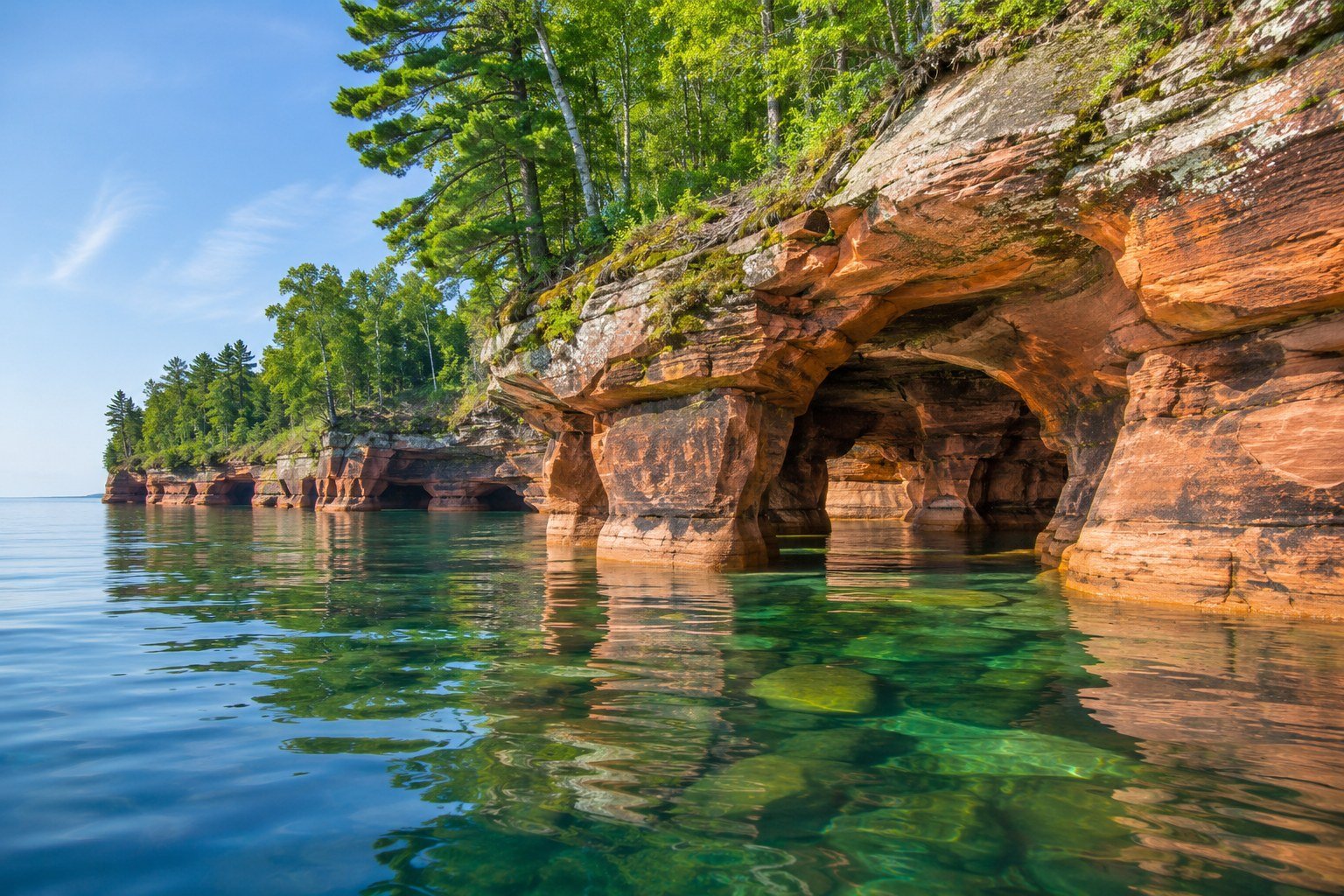
The Apostle Islands’ sandstone shoreline is a compelling reason to visit Lake Superior, but a sea-cave trip is not ordinary sheltered-water kayaking. Cold water, waves and changing weather make preparation central to the experience. This guide is for travelers considering a guided outing, with a flexible land-based plan if the lake does not cooperate.
Start with the right expectations
The National Park Service lists authorized outfitters offering guided trips, equipment and instruction. For a first sea-kayaking visit, use that list as the starting point and ask which trip fits your experience. Do not select a route solely because its photographs show calm water.
A guided booking does not guarantee access to caves on a particular day. The operator may change the route or cancel because of conditions. Read that policy before paying and avoid making cave access the only acceptable outcome of the holiday.
Choose the outing, then choose accommodation
Compare mainland and island trips by meeting point, total time, effort and equipment. Meyers Beach and Little Sand Bay are mainland launch locations identified by NPS, but the correct meeting point depends on the booked operator and route. Follow your actual confirmation rather than driving to a familiar name.
A base around Bayfield or the nearby peninsula can keep the morning manageable. Check the journey to your meeting point and allow time for fitting equipment and instruction. Do not plan to arrive at the exact departure minute after a long drive.
A two-day framework with room for weather
On day one, arrive, confirm the trip and explore on land. Ask the outfitter when the weather decision is made and what information you should check before leaving your accommodation. Prepare clothing and keep valuables that are not needed on the water secure.
Make day two the main guided outing, with the rest of the day flexible. Do not book another timed attraction immediately after the advertised return. Loading, changing and a revised route can add time even when the trip goes well.
If your schedule allows, keep an additional possible outing window. That does not mean pressuring the operator to launch; it simply gives the weather more than one chance to support a suitable trip.
Equipment and conditions deserve serious attention
NPS warns against small open boats, canoes, sit-on-top kayaks and similar craft for the sea caves. It describes cold water and quickly changing conditions as important hazards. Ask the outfitter about the sea kayak, immersion protection, flotation and rescue arrangements appropriate to your trip.
Wear the required equipment and follow the guide’s instructions. A life jacket is essential, but it does not make cold-water exposure harmless. Stay with the group and do not enter a cave independently because another boat has done so.
For experienced independent paddlers, consult the full current NPS guidance, marine forecast and route information. This visitor itinerary is not a substitute for training, rescue skills or a competent launch decision.
Make the backup day worthwhile
Choose a land-based shoreline walk, visitor-center stop or town visit that you would enjoy even if paddling never happens. Ask local staff about open trails and current conditions. A boat excursion may also be an option, but it has its own weather limits and availability.
Do not replace a cancelled sea-kayak trip with an improvised solo launch or assume a different beach is sheltered. If you want an inland-water alternative, ask a qualified local operator to help choose one suited to the day and your ability.
Budget and booking questions
Compare the full price including equipment, any launch or parking fees, transport and the duration of instruction. Ask about age restrictions, swimming or experience requirements, group size and refund arrangements. Cheapest is not a useful comparison if the trips have different safety equipment and support.
Keep the experience focused: one well-chosen guided trip and time around the peninsula can make a rewarding visit. There is no need to add an overnight paddle or an island crossing to make a short holiday feel complete.
Frequently asked questions
Can a beginner kayak the sea caves?
Discuss a suitable guided trip with an authorized outfitter. Conditions, equipment and the specific route matter; do not improvise an independent sea-cave outing.
Are sit-on-top kayaks suitable for the caves?
NPS does not recommend them for the sea caves. Consult its full guidance and use equipment appropriate to Lake Superior conditions.
Will my tour reach the caves?
That depends on conditions and the operator’s decision. Read the route-change and cancellation policy before booking.
Keep planning your trip
Official planning resources
Planning information checked November 4, 2026. This is an independently planned itinerary; opening hours, access rules and availability can change. Check the linked official resources for your travel dates.