Pair a New Orleans neighborhood with each evening plan
| Decision | How to plan it |
|---|---|
| French Quarter | Use the morning for a walk and choose one nearby evening reservation. Save the route back to your lodging. |
| Another neighborhood | Group your afternoon stops around the evening venue. Check the return transport before committing to a late show. |
| One fixed reservation | Protect its arrival time and keep other stops flexible. Choose a nearby indoor option if weather interrupts the walk. |
A good New Orleans trip needs room between reservations. The city is about music, food and neighborhood character as much as individual sights. This three-day itinerary combines the French Quarter, a second neighborhood and a museum or park day, with evenings kept flexible enough to follow a live-music schedule.
Plan around the experience you want
Choose accommodation according to how you want your evenings to feel. A location near the French Quarter makes a first visit straightforward, but compare the actual street and room position if quiet sleep matters. Nearby does not always mean peaceful, particularly during a major event.
Reserve any essential dinner or performance first, then arrange daytime sightseeing around it. Festivals, conventions and holiday weekends can change availability considerably. Check dates before assuming a normal weekend price or a walk-in table.
Day 1: the French Quarter at walking pace
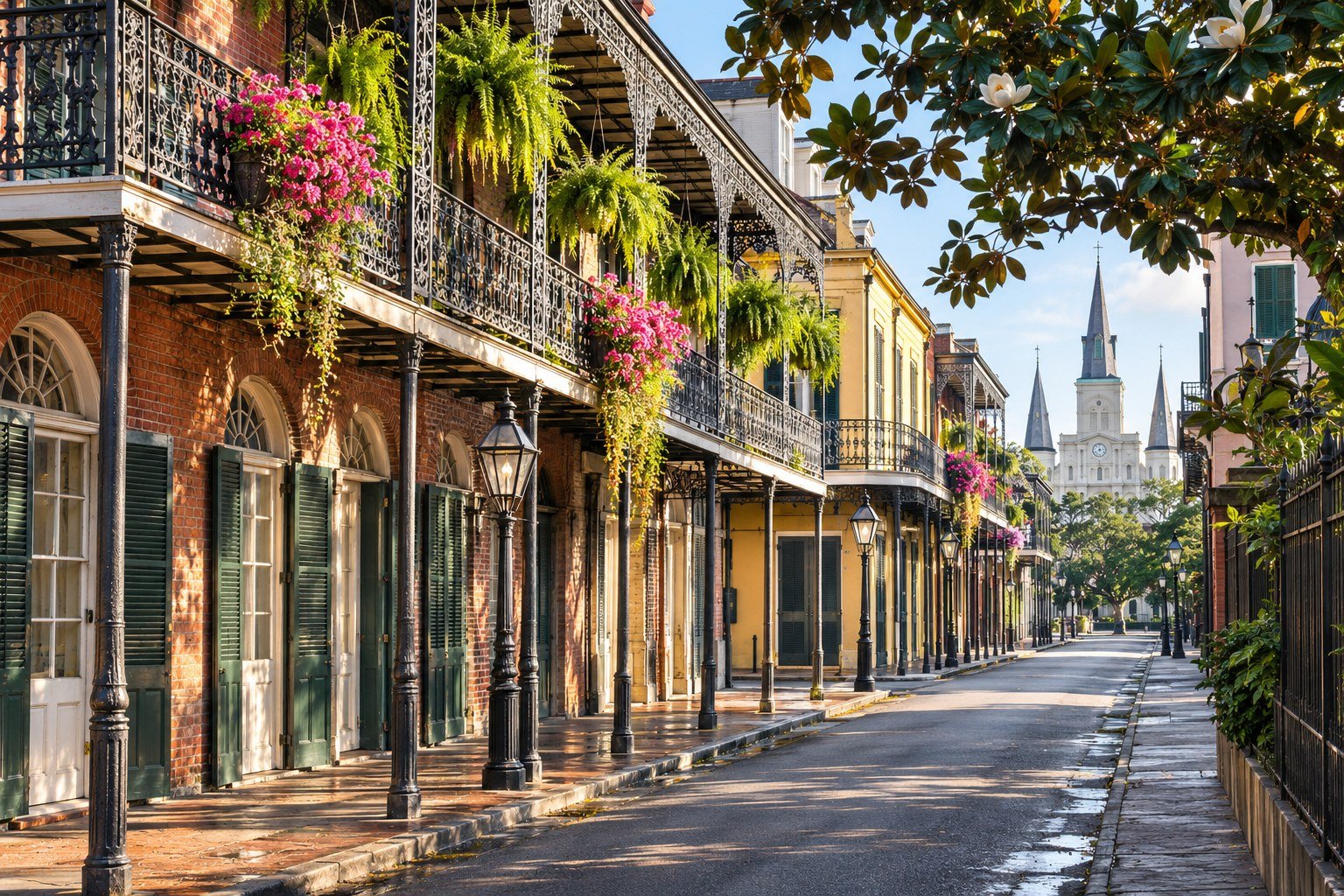
Begin around Jackson Square and explore the surrounding streets while you are fresh. Allow time for Royal Street, the French Market area and a stop for coffee and beignets. Choose a museum or a guided history walk if you want more context than an outdoor stroll provides.
Follow lunch with time beside the Mississippi River. This provides a useful break from the busiest streets and keeps the afternoon compact. Do not make your first day depend on a long chain of restaurant queues; choose one must-try food stop and keep the rest flexible.
For the evening, look at current listings around Frenchmen Street and select a venue by its music, admission arrangements and age policy. Some places have covers or minimums. Supporting performers and venues should be part of the evening budget.
Day 2: the Garden District and a different rhythm
Make the Garden District your daytime focus, pairing an architecture walk with lunch and a slower afternoon. A knowledgeable local guide can help explain the social history behind the streets and houses. Choose a tour that addresses the wider history rather than treating buildings as scenery alone.
A streetcar journey can be part of the day, but check the current route and service before leaving. Leave extra time if you have a fixed reservation afterward. If heat or rain makes walking uncomfortable, shorten the route and spend more time indoors instead of trying to complete a prewritten checklist.
Day 3: choose a museum day or City Park
If history is your main interest, give the National WWII Museum a substantial block of time and check the museum’s own ticket information. Avoid treating it as a quick stop between lunch and a flight. A major museum can fill most of the useful sightseeing hours of a day.
For a more open-air alternative, plan around City Park and its gardens or cultural attractions. New Orleans’ official visitor guide identifies the park as a major place to explore beyond the French Quarter. Choose a small number of stops and allow for the transfer back to your accommodation.
Food without an exhausting reservation list
Build meals around variety: a casual sandwich lunch, a traditional Creole dinner and a café breakfast offer different experiences. You do not need a famous-name restaurant for every meal. Check menus, dietary options, booking conditions and dress expectations directly.
For a food-focused trip, protect your appetite as well as your schedule. A long tasting experience followed immediately by another elaborate dinner is rarely the best use of either booking. Leave space for an unexpected snack or a recommendation you discover during the visit.
Practical planning for heat, transport and evenings
Pack breathable clothing and a rain layer suited to your travel season. Alternate long outdoor sections with breaks, and avoid building every day around midday walking. Check the forecast and any official travel advisories before an arrival during storm season.
Plan the journey home from a late performance before going out. Keep valuables secure and use a transport option that suits the hour and location. The most useful planning decision is geographical: one daytime neighborhood and one evening area generally works better than repeated journeys across town.
Frequently asked questions
Is three days enough for New Orleans?
Three days allows a strong introduction to the French Quarter, a second neighborhood and either a major museum or City Park. Add time for festivals or excursions.
Is New Orleans only a nightlife destination?
No. Museums, architecture, neighborhood history, food and parks can fill a visit even if late-night bars are not your interest.
Do I need dinner reservations?
Book a restaurant in advance when it is essential to your trip, particularly during events. Keep some casual meals flexible.
Keep planning your trip
Official planning resources
Planning information checked November 4, 2026. This is an independently planned itinerary; opening hours, access rules and availability can change. Check the linked official resources for your travel dates.