
PRACTICAL GUIDE · TRAVEL PLANNING
How to Plan a U.S. Domestic Flight Connection Without Rushing
Travel in the USA Editorial · Reviewed November 10, 2026
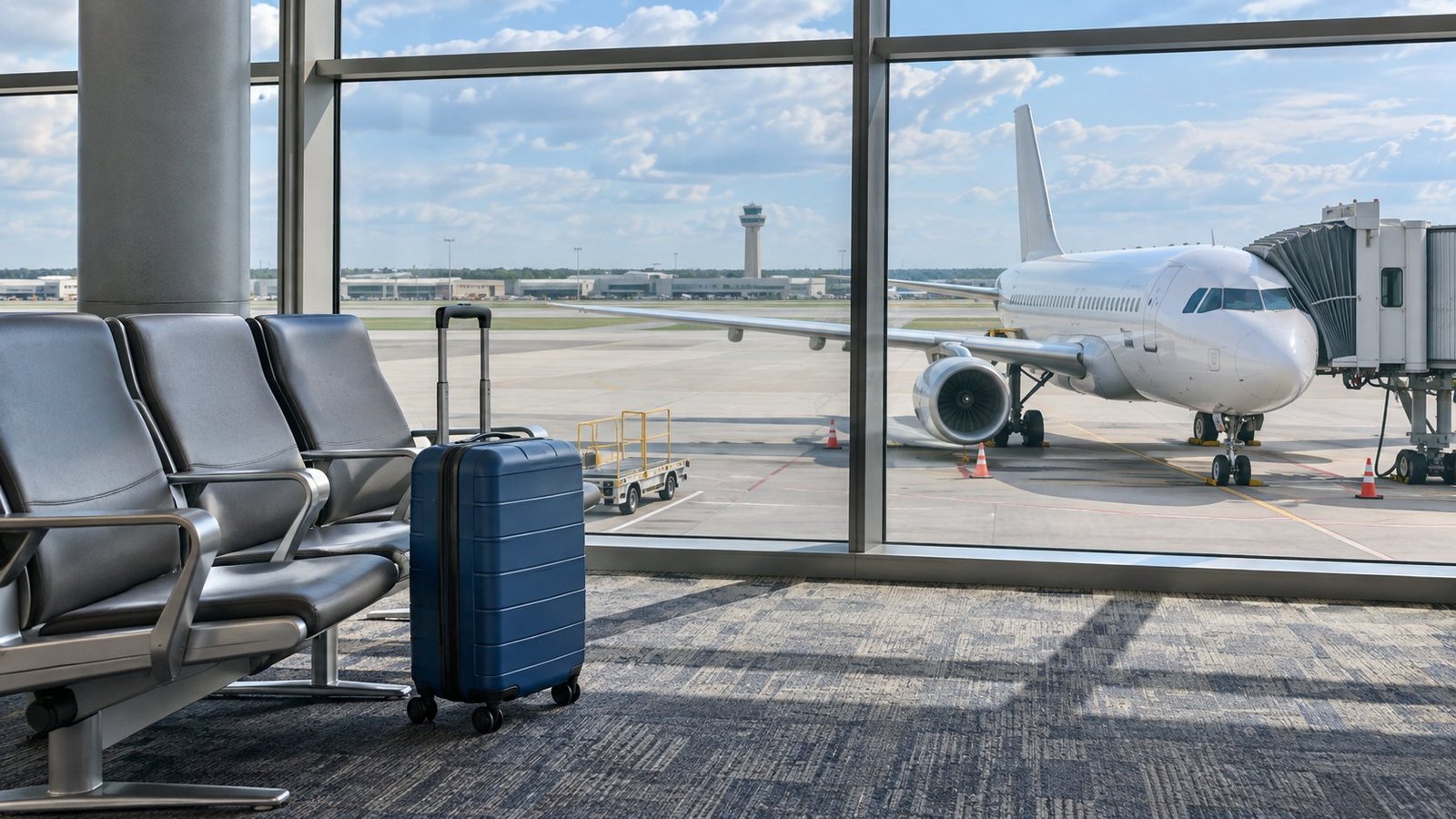
A domestic U.S. connection is a series of small tasks: get off the first plane, find the next gate, and arrive before boarding closes. A connection looks simple when a search engine shows two flights as a single row. Read the details before you pay, especially if you are traveling with children, changing terminals, checking a bag or reaching a destination with only a few flights a day.
Start with the ticket, not the layover length
Look for both flights on a single ticket when possible. That gives the airline or booking agent one itinerary to work from if an inbound delay affects the onward segment. Check who operates each leg and which carrier will handle disruptions. Two flights bought in one checkout are not necessarily a protected connection if the seller labels them separate tickets or a self-transfer. If you cannot tell, ask the seller before buying.
On separate tickets, assume you may have to collect and recheck your baggage, meet a second check-in deadline, and clear security again. Even when you travel with only a carry-on, a late inbound flight may leave you responsible for replacing the onward ticket. Compare the potential extra cost with the headline saving. If a self-transfer is unavoidable and the next flight matters, an overnight stop can be the more reliable choice.
Count backward from the second flight’s boarding cutoff
Departure time is not the latest time you can arrive at the gate. Read your airline’s boarding and gate deadlines, then subtract the time you expect to spend walking or riding between concourses. Add time to get off the first aircraft, find your bearings and deal with a gate change. For example, a connection advertised at 75 minutes feels very different if your second carrier closes boarding before departure, your arriving seat is near the back, and the gates are a long walk apart.
Use the airport’s own terminal map and the operating airline’s app. Check whether a terminal transfer can be made within the secure area or involves exiting and screening again. A flight number or terminal shown at purchase may change, so verify on the day. A booking site’s willingness to sell a short connection does not tell you whether it suits your walking pace, mobility needs or group.
Check the schedule beyond the two flights you chose
Look at later departures to the same destination. A connection with several later flights gives you more ways to recover than the last departure of the evening. An earlier first flight can help if your final stop has sparse service. For a cruise, wedding, long drive or expensive nonrefundable activity, consider reaching the final city the day before. Use flexible ground arrangements when practical so a manageable flight delay does not turn into multiple missed bookings.
Do the same check for weather and season. You do not need to predict a particular storm. Instead, ask how you would respond if the first segment were an hour late or the second leg were canceled. Save the airline’s contact route and know whether your hotel has a late-arrival process. The best choice may be a longer connection in the same terminal or a nonstop flight that costs slightly more.
Prepare documents and luggage before departure
Keep an accepted ID, both boarding passes and essential medication in your personal item. Check current identification requirements with TSA before leaving home. If you check a bag, confirm the destination printed on the tag at drop-off and ask whether you must collect it during the connection. Save the baggage receipt, and be ready to move essentials into your personal item if your carry-on is checked at the gate. Treat travel that begins abroad as a separate planning problem: this guide assumes both flight legs are domestic.
What to do if your first flight is delayed
Check the onward flight in the operating airline’s app before boarding the first leg or as soon as you land. If the schedule looks tight, look for rebooking options and contact the airline using the official app, desk or phone. Check whether a replacement flight also changed the arrival airport or baggage arrangements. If the last flight is missed, ask about the next confirmed option before committing to a separate hotel or expensive replacement ticket.
The U.S. Department of Transportation airline dashboard compares carrier commitments for disruptions within the airline’s control. Meals, accommodation and other assistance depend on the carrier and circumstances. Separately, DOT refund guidance explains that a cancellation or qualifying significant change can entitle you to a refund if you decline travel and the airline’s alternative compensation. A refund and a rebooking solve different problems; decide which outcome you need before accepting an offer.
Frequently asked questions
Is there a universal safe connection time?
No. Start with the boarding cutoff and then account for the terminal, security, mobility, baggage and the next available flight. Allow more room when a missed connection would be costly.
Do I always go through security again?
No. Confirm the airport’s layout and whether your onward terminal is reachable within the secure area. Leaving to collect a bag or transfer landside changes the calculation.
Is a train a practical substitute for one flight leg?
It can be on some city pairs, but treat a separately booked train as its own trip. Compare the station transfer and ticket flexibility in our first-time Amtrak guide.
Official guidance checked November 10, 2026. Reconfirm airport maps, airline cutoffs and policies for your itinerary.
Estimate the connection using the time you can actually use
| Decision | How to plan it |
|---|---|
| Same ticket | Check the arrival and departure terminals and the airline’s boarding cutoff. Estimate from when you can leave the first plane to when the next gate closes. |
| Separate tickets or bags to reclaim | Confirm baggage collection, the next check-in deadline and whether you must clear security again. Allow for each step before booking. |
| First flight runs late | Check the airline app and available onward options. Keep your booking reference handy and check the airline’s published policies before choosing a replacement. |
U.S. DOT airline delay and cancellation dashboard