
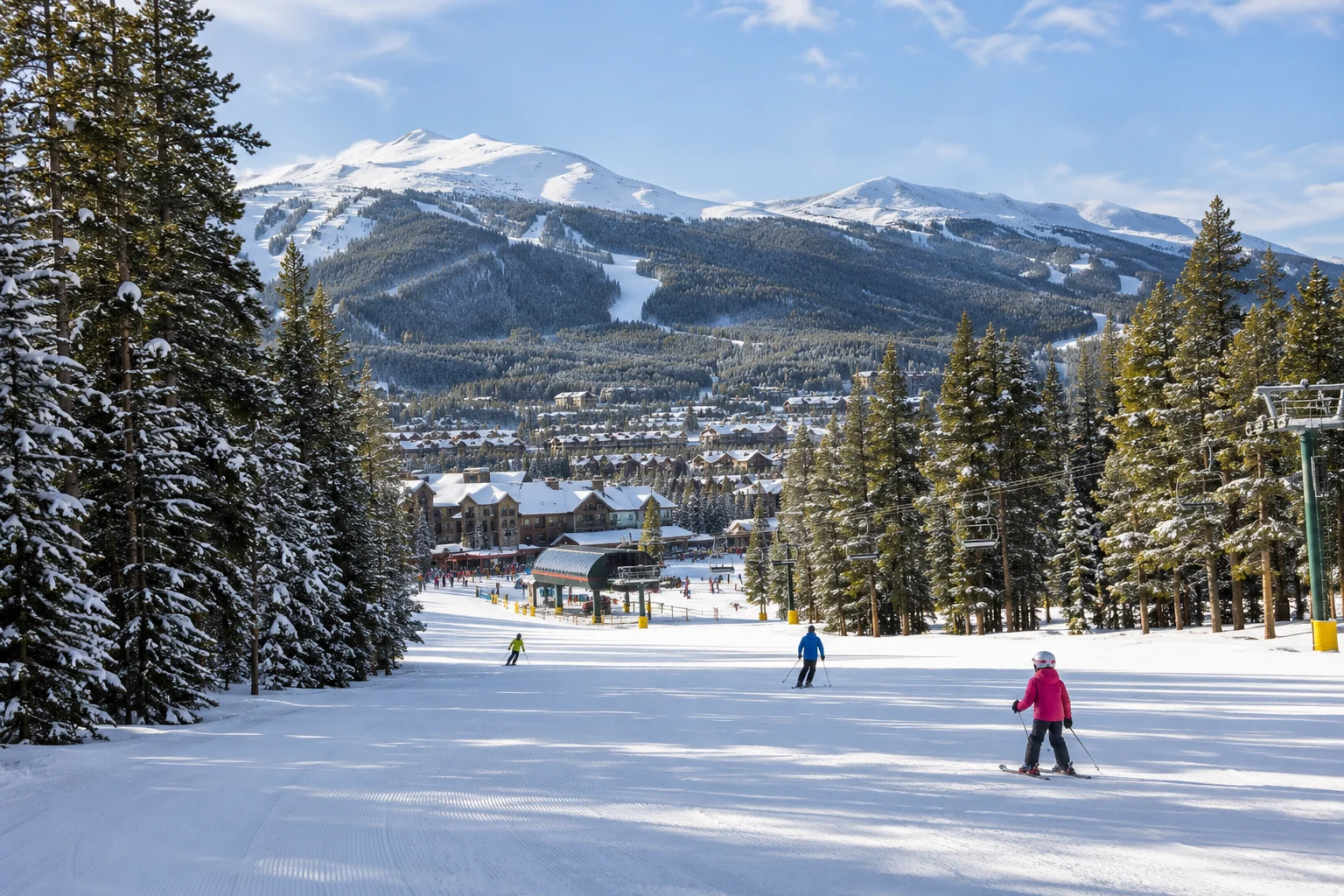
Use your lesson confirmation to choose a base
| Decision | How to plan it |
|---|---|
| Lesson at Peak 8 | Map your lodging to the specified meeting point before paying. Check how you will carry rentals for the last segment. |
| Lesson at Peak 9 | Make the same check using the Peak 9 location. A room convenient to one base may add a transfer to the other. |
| Mixed group | Choose a meeting point reachable without skiing. Compare how the group will get to dinner separately from the morning lesson route. |
Breckenridge’s base-area guide
A first ski trip to Breckenridge gets easier when you choose one base area and build the day around it. The Colorado resort spreads across five peaks, but its designated learning areas are concentrated at Peak 8 and Peak 9. Pick between them based on where your lesson meets and how you will arrive with your boots and gear. You can learn to stop and turn, take a proper lunch break, and still spend the evening in town without trying to cover the whole mountain. This guide is for adults and families planning their first two days on skis or a snowboard.
Start with Peak 8 or Peak 9
The resort identifies the Rip’s Ride learning area at Peak 8 and the Quicksilver learning area at Peak 9. Both are sensible places to ask about first-timer instruction. The terrain guide also lists green options near both bases once you can stop and link turns. Check the live trail map before setting out. The ski school may use different meeting points for different products, and the terrain open on an early or late season date can be narrower than the printed map suggests. Use your confirmation email to make the final call.
Peak 8 makes sense when your lesson and lodging line up there, or when your transfer brings you to the base with few steps. The BreckConnect Gondola links town and the Peak 7 and Peak 8 bases during operating periods. Look up the opening time and the return arrangement for your dates before using the gondola to make a tight lesson appointment. Walking from a hotel to a gondola with a bag of clothes is a different trip from doing it in stiff ski boots while a child carries skis. Ask your lodging whether you can store equipment overnight near the base.
Peak 9 suits travelers who want to be based toward the south end of town. The Quicksilver side and Beaver Run have distinct access points, so match the hotel, rental shop and lesson address on a map. A property marketed as close to Peak 9 can still leave a family with a walk or a shuttle hop to the right place. Families with children in separate lessons should compare the two meeting points, drop-off windows and pickup times before paying. Keep a screenshot of each booking in case phone reception or cold batteries get in the way.
Book instruction, rentals and mountain access in that order
Choose a lesson that matches the skier’s age, sport and experience. For someone who has never put on skis, a beginner lesson lets the instructor handle boots, stopping, and terrain selection in a logical sequence. Adults who have skied only once years ago should describe what they can do now when booking. A snowboard lesson is its own product. Decide whether people who want different sports are happy splitting up, and agree on a place to meet afterward. If your dates are fixed around a school holiday, reserve the lesson before committing to a nonrefundable room.
Read the lesson inclusions carefully. The class, equipment rental and access product can appear as separate purchases. Ask the resort what access is required for the lesson and what you would need for independent practice afterward. Make a note of pickup and return hours for the rental shop. Try on boots with one pair of ski socks and speak up if there is sharp pressure or your toes go numb. Ask how to carry the equipment and where to leave it during a meal. Collecting gear the previous afternoon, where your shop allows it, frees the morning for check-in.
Day one on the snow
Give yourself a generous buffer between leaving your room and the lesson. Breakfast, layers, buses and boot fitting all take longer with a group. Pack gloves, goggles and a dry spare layer for a child. Put the instructor’s check-in location on your phone alongside your lodging address. Once the lesson starts, use the instructor’s choice of terrain and pace. The first morning may involve several repetitions of standing, sliding a short distance and stopping. A small practice slope with room to reset can teach you more than an early lift ride.
After the lesson, ask for one specific place to repeat what you learned. If the instructor suggests another lesson before going on a chair, you have a useful plan for the next day. Take a long break at the base and decide whether anyone still wants a few easy runs. On the way back to your room, note the exact stop or building entrance you’ll use in the morning. If you return rentals on the final day, confirm whether you can drop them at the same shop or must take them to another location.
Day two and an evening in town
Return to the same base so the morning feels familiar. Skiers who can turn and stop reliably can ask about the next open green run. The resort lists Quicksilver SuperChair on Peak 9 and Rip’s Ride on Peak 8 among the options to investigate at that stage. Trail colors are relative to this mountain, and the rating alone leaves out surface conditions, visibility and traffic. Look at how the run feeds back into the base. Decide on a turnaround time before the last lift and take a break if your legs are too tired to control speed consistently.
Keep part of the trip for Main Street. Plan an early dinner or a short walk near the hotel when everyone has changed into regular shoes. A group with one person who would rather spend a day in town can agree to meet there instead of making them wait in a base lodge. It also helps to build a spare morning into the trip. You can use it for an extra lesson if the first day went well or keep it for town if lifts, roads or energy levels make a different plan sensible.
Getting there and choosing lodging
Compare the full cost of a car with a shuttle or transfer from your arrival airport. A car adds fuel, parking, winter driving and time for snow removal. A shared transfer adds pickup rules, fixed times and luggage limits. If you choose a car, check Colorado Department of Transportation road conditions and the requirements in force for your route before you leave. If you stay in town, consult the local transit map and match the bus stop to your building’s door. Build extra time around a holiday arrival or a forecast storm.
Breckenridge is at high elevation. Give yourself time to settle in before a full day of exertion, eat and drink regularly, and pay attention to how your group feels. If someone feels unwell, stop skiing and seek appropriate advice. For a short trip, put the first night in town ahead of the first booked lesson if your schedule allows. That also gives you time to learn the route from the room to the base in regular shoes. A room with space for wet gloves and boots can be more convenient than a room with a better view.
Is a two-day trip enough?
Two days on the same base are enough for a focused introduction. Plan the first day around instruction and use the second to repeat the skills that made you feel in control. If you have only one snow day, book the class and give yourself time to arrive comfortably. If you have more days, keep at least one flexible block for weather or rest. The most useful booking checklist is short: lesson meeting point, required access, rental pickup, transport to the base, and a clear return plan at the end of the day.


