
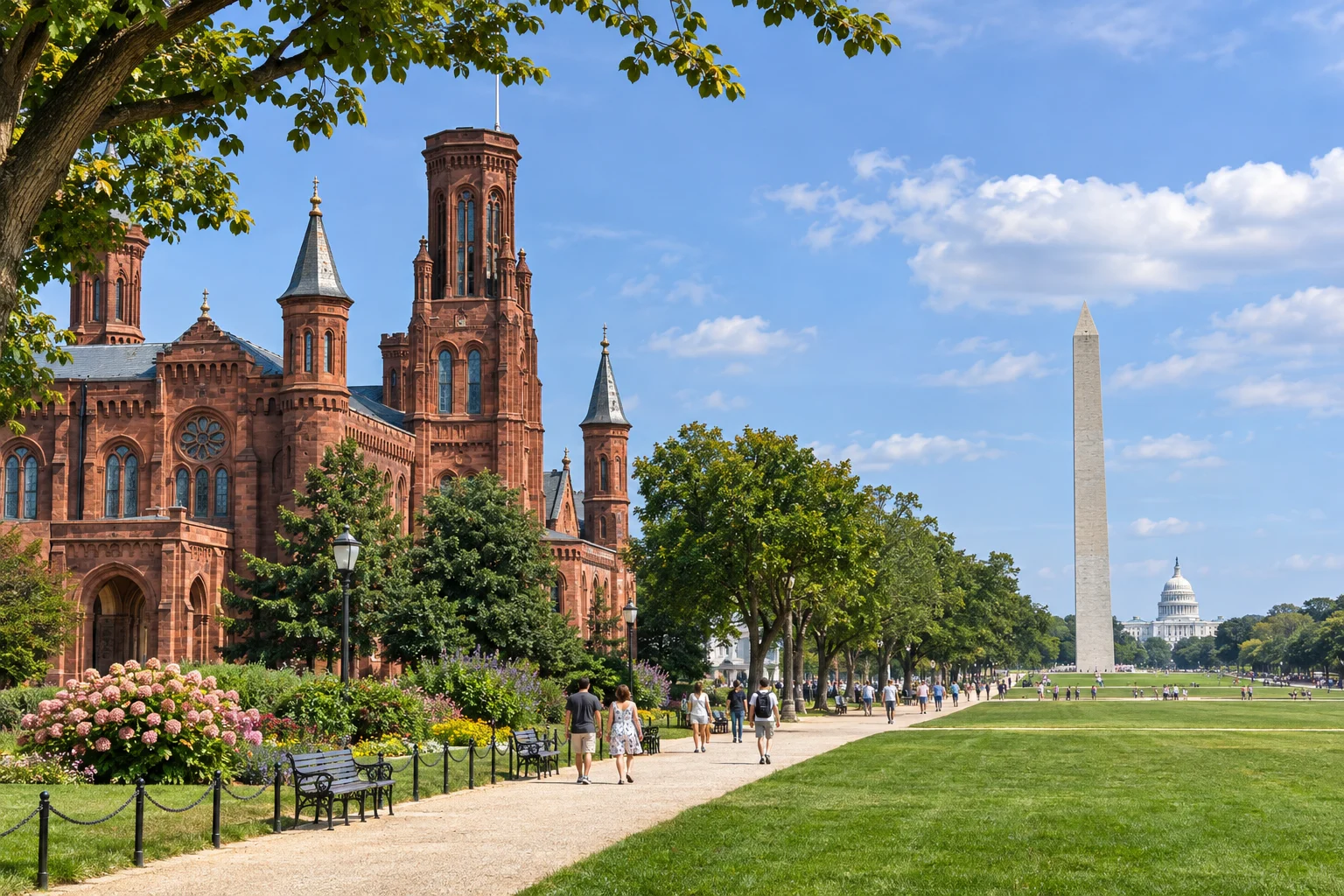
Build two Smithsonian days around two priorities
| Decision | How to plan it |
|---|---|
| Day one | Pick one museum and confirm any pass requirement before arranging lunch or another stop. Leave time for the collections that brought you there. |
| Day two | Choose a second museum with a different focus. Map its public entrance and any bag or security procedures separately. |
| A museum is full | Use a backup close to that day’s anchor. Check the backup’s hours and admission rules before you head across the Mall. |
Choose two priority Smithsonian museums for a two-day Washington visit, then keep a shorter third visit optional. The institution has enough collections to fill a much longer trip, and a rushed sequence of entrances can leave you with little memory of what you saw. Start with the subjects that interest your group, check which buildings require entry passes and build each day around one main museum. Time for lunch and a walk outside makes the plan easier to enjoy.
Start with subjects, then use the map
Ask each traveler to choose one subject they would genuinely like to explore. It might be natural history, aviation, American history, art or a particular cultural collection. Look up the relevant museum on the Smithsonian’s official directory and check where it is. Several museums line the National Mall, while others are elsewhere in Washington, Virginia or New York. The institution’s name does not mean every collection is within a short walk of your hotel.
Make a list with the museum name, location, entry requirements and the one collection or exhibition that matters most to you. Then compare two candidates that work well from the same base. If a specific exhibition is your main reason to visit, check its dates and any separate access information. Keep those details beside your travel dates so that a compelling photograph from an old article does not turn into a plan for something that has already closed.
Check passes before filling the rest of the day
Smithsonian admission in Washington is generally free, but some destinations require free passes or tickets. The official museums page identifies the locations with those requirements and links to booking information. Use that list and the individual museum website to confirm the rules for your dates. A free museum can still require advance planning, and a general admission arrangement may differ from a separately ticketed activity.
If the museum you most want has timed entry, make that the anchor of one day. Leave enough time to reach the correct entrance, follow any screening procedure and find your first gallery. Avoid placing a second timed booking immediately afterward. If the available slot falls in the afternoon, use the morning for a walk, a shorter nearby activity or a relaxed lunch. A reservation is more useful when the rest of the day has enough flexibility to protect it.
Day one with a natural history focus
If natural history is the group’s first choice, use that museum as the morning anchor. Before entering, identify two or three subjects to look for rather than trying to follow every gallery in sequence. Give everyone time at the display they care about most. A visitor interested in geology may want a different pace from someone fascinated by animals, so agree on how you will stay together or where you will meet if the group separates.
Take a proper break before deciding on the afternoon. If the morning has been absorbing, spend time outdoors and save a second large museum for tomorrow. If everyone still wants more, choose a shorter collection or a limited route in another nearby building after checking its access and hours. The afternoon visit should be something you can enjoy within the time and energy you actually have. Leaving while you are still interested can be better than continuing until everyone is tired.
Day two with history, aviation or art
Use the second day for a contrasting subject. If you choose a history museum, select a few themes that connect with the trip or the interests of your party. For aviation, read the museum’s current visitor page carefully so that you reserve and travel to the location you intend to see. For art, pick a group of works or a temporary exhibition as a manageable starting point. Let the collection lead the pace once you are inside.
A useful second-day structure is a main visit, lunch and an optional return to a favorite area. You do not have to see a different building after every meal. If an exhibition has raised questions or caught your attention, give it more time. If the group is ready for fresh air, use the afternoon for the Mall and a nearby neighborhood. Check the length of any walking route on the map because a broad open space can look shorter than it feels at the end of two museum days.
Planning with children and mixed interests
Let each child choose something to find and give the visit a clear end point. A short list of three things can work better than a promise to see the whole building. Ask which display they want to return to before moving on. Bring a notebook or a simple observation task if that helps them engage, and check the museum’s rules for items you can carry. Keep the plan light enough that a snack or a rest does not feel like a disruption.
For adults with different interests, agree on a shared start and a meeting place. Choose a location that is easy to identify on the building map rather than a vague plan to meet near the exit. If anyone needs a shorter visit, check seating, accessible routes and the location of facilities before choosing the gallery sequence. The Smithsonian’s visitor information is the right place to begin, followed by the individual museum’s details for any specific access need.
Food, bags and the time between buildings
Look up the visitor guidelines for the museums you choose. Check food, bag and security rules before leaving the hotel, especially if you are carrying luggage after check-out. Plan where you will keep anything you cannot bring comfortably into the building. A day bag with only what you need makes transitions between galleries and breaks easier than a full travel backpack.
Choose a lunch plan that fits the route. You can check museum dining options or identify somewhere along the walk to your next stop. If a restaurant reservation is important, allow enough time to finish the visit, collect anything stored and leave the museum. Keep the return transport simple. After a long period on your feet, a nearby station or an agreed pickup point can matter more than adding one final attraction.
A realistic plan for arrival and departure days
On arrival day, consider a short museum visit only if the timing and entry arrangements are genuinely flexible. Flight delays, bag storage and hotel check-in can absorb more of the afternoon than you expect. Put your most important museum on a full day instead. If you arrive early and have spare time, use it for orientation around the Mall or a compact visit that does not depend on a tight appointment.
On departure day, work backward from when you must collect your bags and leave for the airport or train. Choose one small goal in a familiar building rather than starting a large new collection. Keep the ticket, route and hotel details together. A thoughtful final hour can be a satisfying end to the visit without turning the journey home into a race.
Frequently asked questions
Can I see all the Smithsonian museums in two days? Choose a small number that match your interests. The institution includes many separate destinations, and two days are best used for depth in a few collections rather than a large number of brief entrances.
Do I need to pay or reserve? Check the official directory and each museum’s own visitor page. Admission and reservation requirements are separate questions, and a free pass may still need to be arranged in advance.
What if my first-choice entry time is unavailable? Put your second-choice museum on that day and check another date or slot through the official booking route. Keep a flexible outdoor or neighborhood activity available so that the day still has a clear shape.


