Build the Parkway drive around confirmed open sections
| Decision | How to plan it |
|---|---|
| Before booking lodging | Map a main Parkway segment and a parallel route. Choose a town you can reach without relying on a single exit. |
| On the road | Pick two stops close to the direction of travel. Allow time to reach a town for meals and fuel. |
| A section closes | Use the confirmed detour and choose a town-based afternoon. Check where you can safely rejoin before following the next milepost. |
NPS Blue Ridge Parkway planning
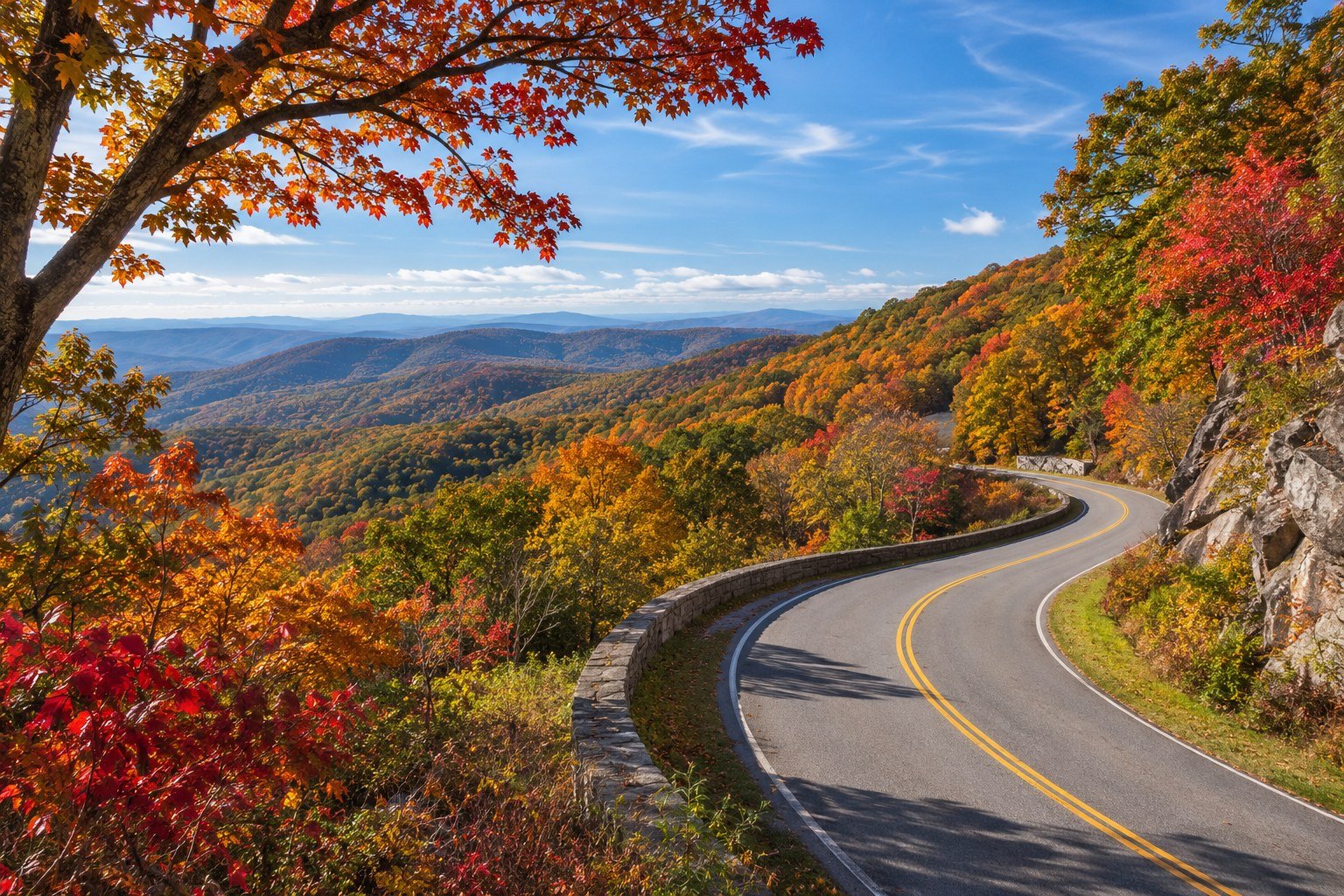
A Blue Ridge Parkway trip should be planned around open sections and slow travel, not a continuous line on an old map. Five days can support a rewarding regional drive with towns, overlooks and shorter walks, but the exact route needs to respond to closures. This guide gives you a flexible planning framework rather than promising an uninterrupted end-to-end drive.
Check the road before choosing overnight stops
The National Park Service publishes a section-by-section road status page with gates, mileposts and detours. Check it before booking and again during the trip. The status available in early November 2026 includes closures and construction impacts, so a through-route assumption would be unreliable.
Choose a smaller continuous area when that gives you more enjoyable time on open road. If you prefer to cover a wider region, use ordinary roads for necessary transfers and rejoin the parkway where access is permitted. A detour is part of the plan, not an invitation to bypass a gate.
Days 1 and 2: a Virginia-focused beginning
Use the first day for arrival and a limited scenic segment near your chosen base. Select one overlook area and one short walk using current NPS information. Do not use an arrival afternoon to chase a distant final viewpoint before dark.
For the second day, choose a connected open section toward the Peaks of Otter or Roanoke area if it fits current conditions. Keep food and fuel arrangements off the parkway in mind. The route is designed for slower travel, with a maximum speed of 45 mph or less rather than highway-style progress.
Day 3: use a town stop as breathing space
A town-centered day around your selected overnight area can balance the scenic driving. Plan laundry, groceries, a café or a local attraction instead of expecting every day to deliver the same number of overlooks.
If a closure interrupts the intended connection, make the transfer on suitable public roads with a realistic time allowance. Do not add a demanding hike after a longer-than-expected detour. A flexible road trip keeps the day’s main purpose clear.
Days 4 and 5: choose one North Carolina area
Depending on open sections and your interests, focus on the Boone and Blowing Rock area or another accessible North Carolina base. Choose one main outing per day and verify trail access separately from road access. An open road does not guarantee every facility or path is operating.
Do not force the itinerary to end at a distant symbolic endpoint. A final morning of scenery followed by a manageable drive home is often more satisfying than an all-day dash. If you want to continue toward Asheville or the Smokies, add time and check those connections specifically.
How to build each driving day
Pick an overnight town, the open section you want to enjoy and a small number of optional stops. Leave room for a longer picnic or a walk that appeals when you arrive. Repeated short stops can consume more time than expected, especially when parking is busy.
Avoid driving to a strict mileage target. The attraction is the landscape and the ability to stop legally and safely. If fog hides the views, choose a lower-elevation alternative or spend more time in town rather than continuing to collect invisible overlooks.
Season, packing and driving habits
Check weather across the elevations you will cross, not just at your hotel. Snow, ice, fog and storm damage can affect access. Fall color timing varies, so choose flexible dates and expectations rather than treating a specific weekend as guaranteed peak foliage.
Bring layers, offline maps, water and snacks. Refuel before a long scenic segment. Use designated parking areas for photographs, keep the road clear and let another person navigate when possible.
Budget and a shorter alternative
Price accommodation, fuel and food before adding paid attractions. Changing hotels may be worthwhile when it reduces backtracking, but moving every night is not essential. Two nights at one well-chosen base can create a more restful trip.
With only a weekend, choose one area instead of compressing this framework. A good Blue Ridge road trip is measured by the time enjoyed, not by completing every mile.
Frequently asked questions
Can I assume the whole parkway is open?
No. Consult the official section-by-section road status before booking and throughout your trip.
Is five days enough for a road trip?
Yes for a selective regional trip. The route should match open sections and your preferred pace rather than an end-to-end target.
Does a navigation app account for closures?
Do not rely on it alone. Cross-check the NPS status and follow posted gates, detours and restrictions.
Keep planning your trip
Official planning resources
Planning information checked November 4, 2026. This is an independently planned itinerary; opening hours, access rules and availability can change. Check the linked official resources for your travel dates.